


 Add:No. 16 Xingye Road, Beijiao Town Industrial Park, Shunde District, Foshan City, Guangdong Province
 PHONE: +86 13509957538
 TEL: +86 0757-26131933
 Email: huayin_glass@163.com

Chinese


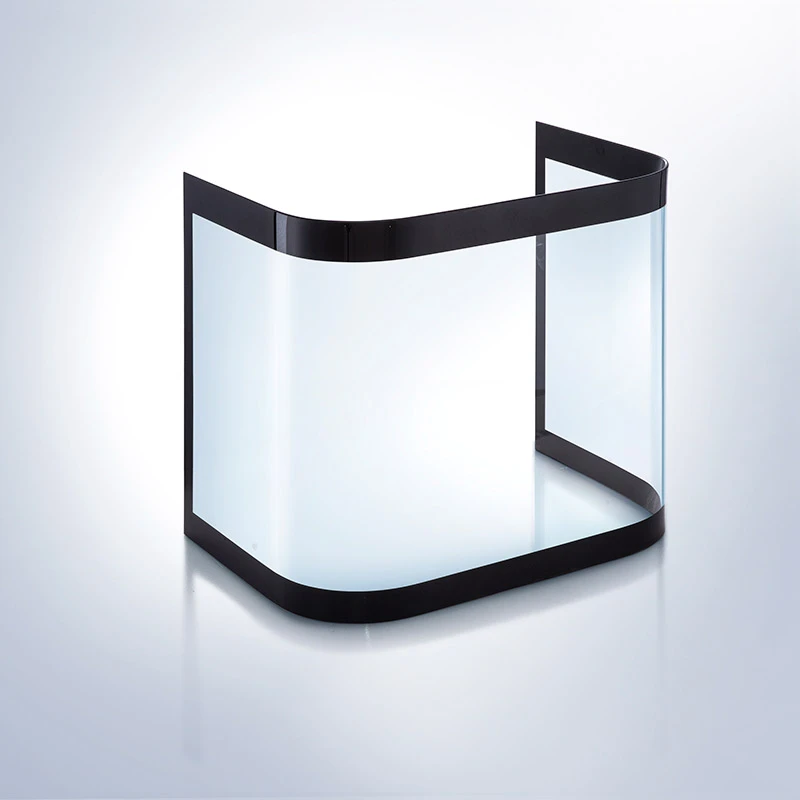
When your freezer door "goes blind" in front of a customer, you lose more than just one sale. According to retail studies, over 60% of consumers will abandon a purchase decision if they cannot clearly see the product inside the freezer. For frozen foods, ice cream, and premium deli items that depend heavily on visual merchandising, this translates directly to lost revenue. For commercial refrigeration manufacturers and brands, the choice of anti-fog technology is no longer a minor specification detail — it is a product competitiveness decision.
Related: Huayin Glass — 25 Years of Custom Glass Deep Processing
Traditional anti-fog coatings work by applying a hydrophilic chemical layer to the glass surface, causing condensed water to spread into a transparent film rather than forming visible droplets. The appeal is clear: low upfront cost, simple application, and no electrical connection needed. But what coating suppliers rarely mention are the limitations. Most coatings degrade with daily wiping and cleaning agents, needing reapplication within 3-6 months. Below -18°C, the anti-fog effect diminishes sharply. Multiple reapplications leave residue, reducing visual clarity over time. And if the glass itself requires electrical heating for condensation control, coatings are not a viable path at all.
The following comparison table highlights the fundamental differences between the two technologies across six critical dimensions:
| Dimension | ITO Heated Glass | Anti-Fog Coating |
|---|---|---|
| Mechanism | Physical temperature control — glass surface stays above dew point | Chemical hydrophilic film — water spreads into transparent layer |
| Effective Lifespan | Sealed inside IGU, matches glass lifetime (10+ years) | 3-6 months, requires reapplication |
| Sub-Zero Performance | Stable and efficient at -25°C | Degrades significantly below -18°C |
| Light Transmittance | 88%+, remains consistently high | 80-85%, declines with repeated coating |
| Maintenance Cost | Zero — no maintenance required | Recurring labor and material cost for re-coating |
| Functional Integration | Compatible with Low-E, argon IGU, curved tempering | Cannot integrate with other glass technologies |
The ITO approach is fundamentally different: instead of treating the symptom (condensation), it eliminates the cause. By depositing a nanometer-thin transparent conductive layer onto the glass and applying a low electrical current, the glass surface is maintained at a temperature above the dew point. Condensation simply cannot form. Power consumption is minimal — for a typical 600mm × 1800mm vertical freezer door, ITO heating draws approximately 21.6W, less than 0.6 kWh per day. More importantly, by keeping products visible and reducing unnecessary door openings, compressor energy consumption can drop by 8-12%.
What makes ITO even more powerful is its compatibility with other glass technologies. ITO heating can be combined with Low-E coatings and argon-filled insulated glass units (IGUs), delivering anti-fog performance and energy-saving thermal insulation in a single integrated glass panel. Explore our Coated Curved Tempered Anti-Fog Glass for curved display applications.
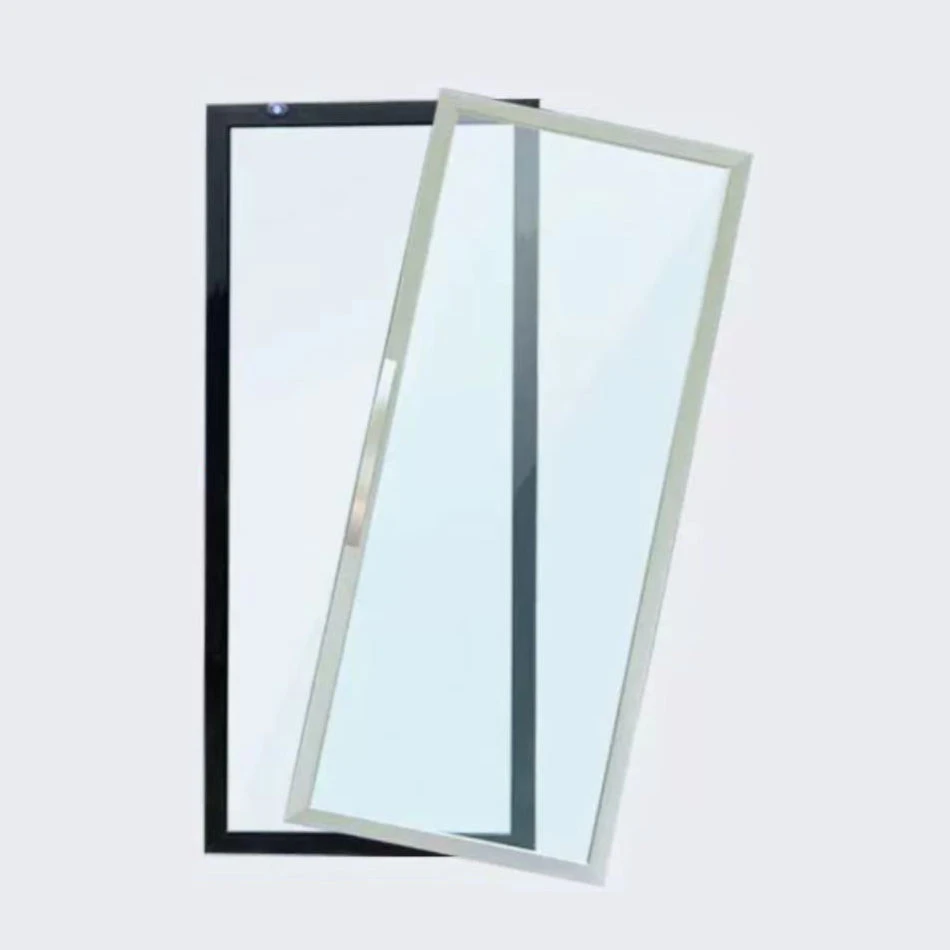
From European supermarket chains to Middle Eastern luxury hotels, from Japanese convenience stores to North American food retail brands, ITO heated anti-fog glass doors are rapidly becoming standard specification for premium commercial freezers. This shift is driven not just by consumer experience demands, but by the powerful competitive differentiation it offers — when your competitor's freezers are still "fogged in," your product wins by default.
Q: Is ITO heated glass expensive to operate?
A: For a typical 600mm × 1800mm vertical freezer door, ITO heating draws approximately 21.6W — less than 0.6 kWh per day. More importantly, by keeping products visible and reducing unnecessary door openings, compressor energy consumption can drop by 8-12%.
Q: How long does ITO heated glass last?
A: Because the ITO coating is sealed inside the insulated glass unit, isolated from air, moisture, and mechanical wear, the theoretical lifespan exceeds 10 years. The critical quality factors are busbar welding and power control system reliability — areas where our in-house ITO coating line makes a measurable difference.
Q: Can ITO heating be applied to curved glass?
A: Absolutely. Our forced convection curved tempering furnace applies ITO coating to multi-radius bent glass, ideal for curved cake displays, cylindrical wine cabinets, and custom-shaped freezer fronts.
At Huayin Glass Solutions, we do not sell off-the-shelf glass panels. We are a custom glass deep-processing partner with 25 years of expertise, operating from our 6,000+ sqm facility in Foshan, Guangdong — the manufacturing heartland of southern China. Our in-house ITO transparent conductive coating line means full customization — dimensions, thickness, curvature all manufactured to your specifications; multi-functional integration combining ITO heating, Low-E coating, and argon-filled IGUs in a single glass unit; and quality assured through ISO 9001:2015 certification, China 3C certification, and High-Tech Enterprise designation. Products are exported to 50+ countries worldwide. See our Refrigerator Glass Door range and Curved Tempered Coated Heated IG Glass for specifications.
Contact us today for a free technical consultation and sample program.
Online Inquiry: Contact Us | Website: huayinglass.com
Huayin Glass Solutions — 25 Years of Custom Glass Deep Processing | Foshan, Guangdong, China | ITO Heated Anti-Fog Glass | Curved Tempered Glass | OEM/ODM Partner
Add:No. 16 Xingye Road, Beijiao Town Industrial Park, Shunde District, Foshan City, Guangdong Province
PHONE: +86 13509957538
TEL: +86 0757-26131933
Email: huayin_glass@163.com

© 2026 Huayin Glass Solutions All Rights Reserved.


