


 Add:No. 16 Xingye Road, Beijiao Town Industrial Park, Shunde District, Foshan City, Guangdong Province
 PHONE: +86 13509957538
 TEL: +86 0757-26131933
 Email: huayin_glass@163.com

Chinese


A beverage-chain equipment buyer recently sent us a competitor's spec sheet and asked one question: it says "ITO heated glass" but gives no wattage, no bus bar width and no coating position — how do we know what we are actually buying? If you are sourcing an ITO heated glass panel for a freezer glass door, these are the six questions worth asking before you commit to a supplier.
When the outer glass surface drops below the ambient dew point, moisture condenses on the door; in freezer duty it turns to frost. Condensation blocks product visibility, drips onto merchandising, and pushes customers to open doors more often to see inside. An ITO heated glass panel solves this with a transparent conductive coating that converts electrical power into evenly distributed surface heat, holding the outer pane above the dew point. It is the only defog approach that actively adds heat — hydrophilic coatings merely spread droplets and do nothing at freezer temperatures.
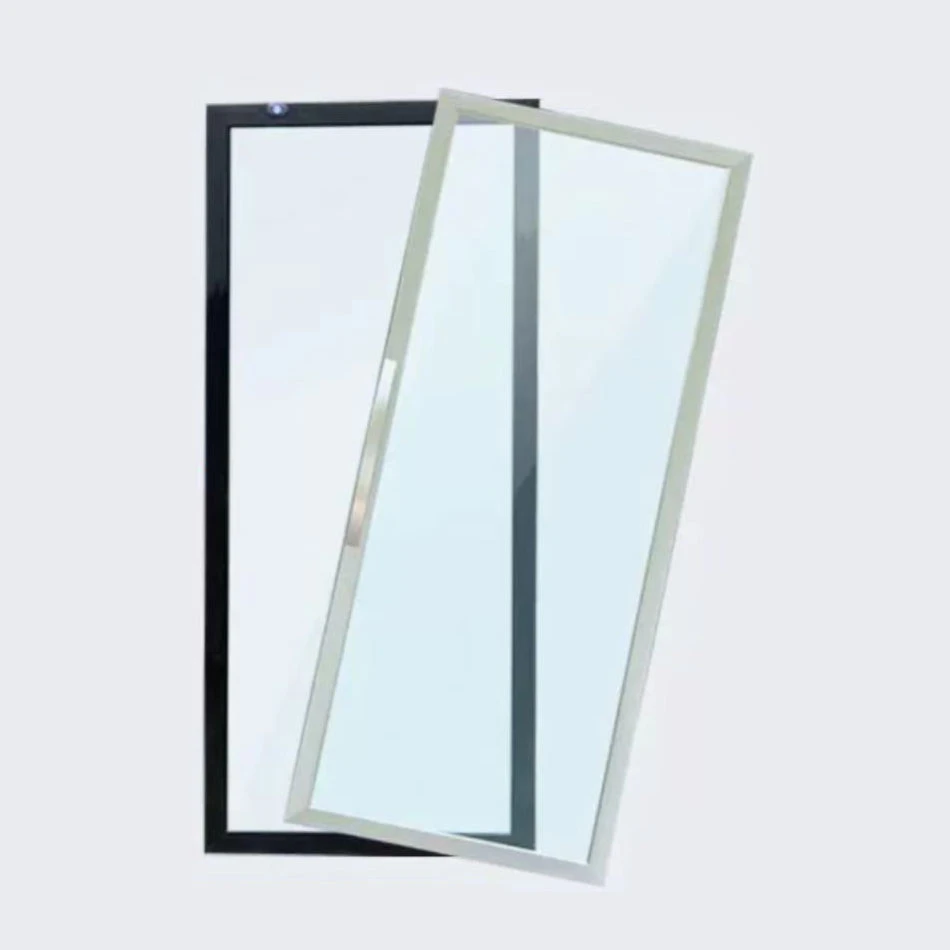
Power density is a function of duty temperature and ambient humidity, not a fixed number. As working ranges:
Higher is not automatically better. Oversized heating wastes compressor-competing energy and can create visible heat shimmer; the right setup is a matched power density plus a thermostat or PWM controller so the panel cycles instead of running flat out.
Two details separate a durable panel from an early failure. First, bus bars: these are the conductive electrodes that feed the coating. Ask for soldered or welded copper bus bars protected by insulating lacquer, and confirm the tab position matches your door frame wiring — top-fed versus side-fed changes the harness design. Second, coating position: in a heated IGU the ITO layer must face the cavity on the correct lite, and the supplier's drawing should number every glass surface (1 through 4 or 1 through 6) so the film location is unambiguous. A spec sheet that omits surface numbering is a red flag.
Both are valid; they suit different cabinets. The table below summarizes the trade-offs we discuss with buyers every week:
| Attribute | ITO single pane | ITO heated IGU |
|---|---|---|
| Thermal insulation | Low — relies on heating alone | High — cavity plus Low-E cuts heat loss |
| Typical duty | Refrigerated beverage displays | Freezers, cold rooms, humid markets |
| Heating power needed | Higher (pane does all the work) | Lower per ㎡ (insulation shares the load) |
| Unit cost | Lower | Higher, repaid in energy savings |
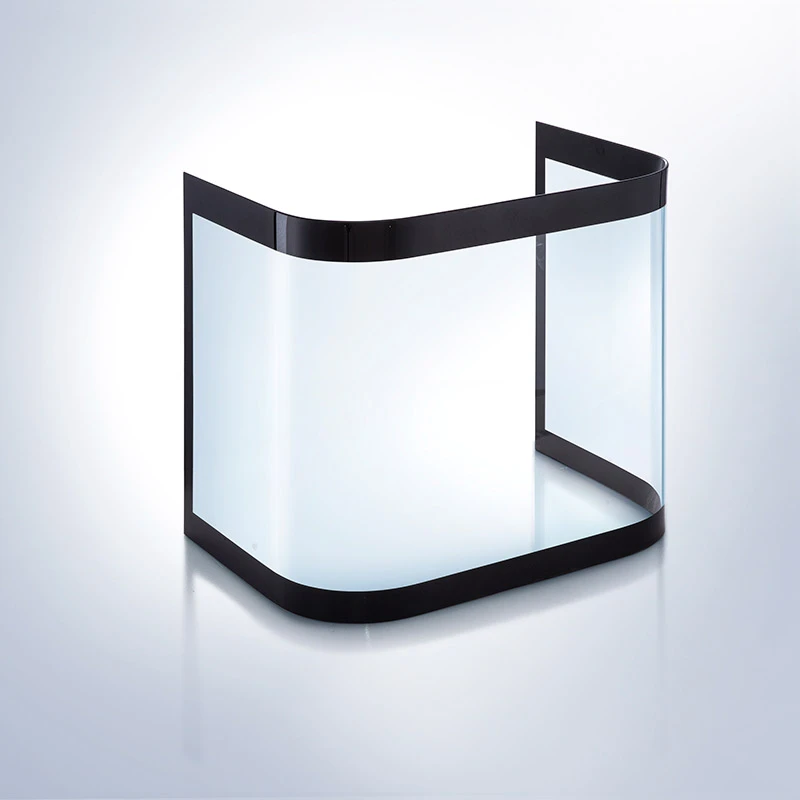
For curved door designs, a curved defogging glass panel combines bending, coating and heating in one tempering cycle, so the film stays inside the protected cavity even on tight radii.
Ask the factory to run four checks on samples before mass production: a power-on uniformity test with an infrared camera showing no hot spots or cold streaks; a resistance measurement within the agreed tolerance band (±10% of nominal is common); a condensation test in a humidity chamber at the target duty temperature; and a dielectric strength test confirming safe insulation between the coating and frame hardware. Each production batch should ship with a resistance record. A supplier that can produce these reports on request is one that actually controls the coating process in-house rather than trading it out.
Send the door drawing, duty temperature, ambient humidity range and available wiring voltage. A capable glass deep-processing factory will return a recommended power density, bus bar layout and IGU build within a few days, with sample pricing. Huayin Glass Solutions has manufactured ITO coated and heated glass in Foshan, Guangdong since 2002 — 6,000+ ㎡ of factory space, ISO 9001:2015 and China 3C certified, exporting to 50+ countries. Heated builds for wine cooler cabinet glass and supermarket freezers are routine custom work.
Send your drawing for a free ITO panel engineering review and OEM quote.
Further reading: ITO Glass vs Defogging Coating · Freezer Glass · All Products
Huayin Glass Solutions — Foshan-based OEM/ODM glass deep-processing factory for refrigerator glass doors, thermally bent glass and home appliance glass panels. Visit www.huayinglass.com.
Add:No. 16 Xingye Road, Beijiao Town Industrial Park, Shunde District, Foshan City, Guangdong Province
PHONE: +86 13509957538
TEL: +86 0757-26131933
Email: huayin_glass@163.com

© 2026 Huayin Glass Solutions All Rights Reserved.


