


 Add:No. 16 Xingye Road, Beijiao Town Industrial Park, Shunde District, Foshan City, Guangdong Province
 PHONE: +86 13509957538
 TEL: +86 0757-26131933
 Email: huayin_glass@163.com

Chinese


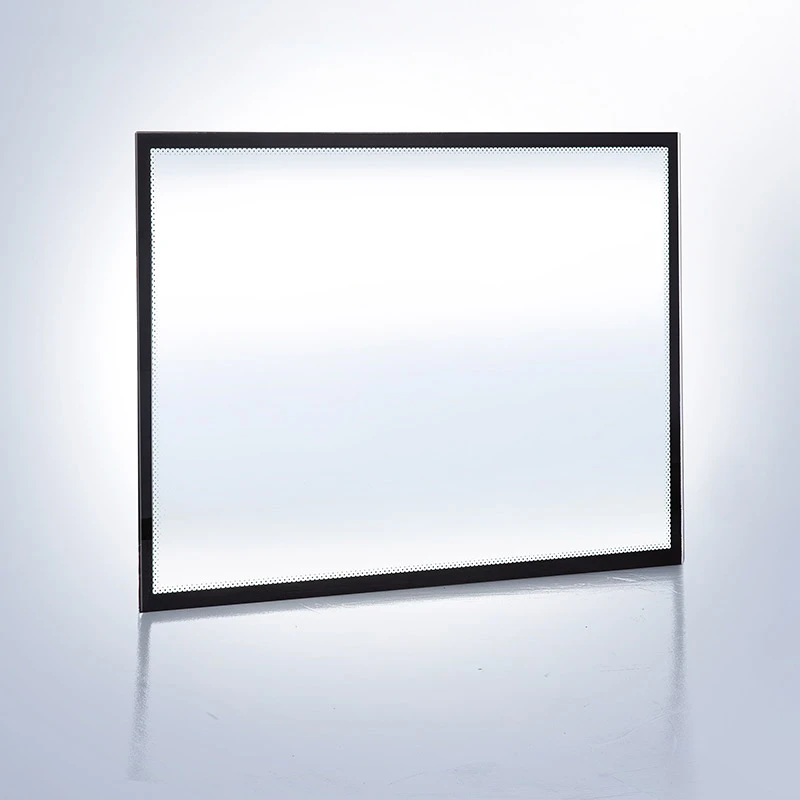
In commercial refrigeration, energy efficiency is not just a regulatory checkbox — it is a competitive differentiator. The glass door of a freezer or display cabinet is the primary interface for heat exchange between the cold interior and the warm store environment. Low-E insulated glass combined with argon gas filling represents the most mature and cost-effective thermal performance upgrade available today. This guide breaks down the technology, the performance numbers, and the practical sourcing considerations for refrigeration manufacturers and brand owners.
Related: Huayin Glass Manufacturing — Full-Chain Deep Processing Capabilities
An Insulated Glass Unit (IGU) consists of two or three glass panes separated by a spacer bar and hermetically sealed, creating a sealed gas cavity. The gas inside — whether air or an inert gas — has significantly lower thermal conductivity than solid glass, which dramatically reduces the overall heat transfer coefficient (U-value). A standard double-pane IGU (6mm + 12mm air gap + 6mm) achieves a U-value of approximately 2.7 W/m²K, compared to 5.8 W/m²K for single pane glass.
But air-filled IGUs still leave room for improvement — and that is where argon filling technology delivers measurable gains.
Argon is an inert gas with approximately 33% lower thermal conductivity than air. It is chemically stable, non-toxic, and non-corrosive. Replacing the air in the IGU cavity with argon significantly reduces both convective and conductive heat transfer. The table below compares the thermal performance of standard air-filled IGUs against argon-filled Low-E IGUs:
| Performance Metric | Air-Filled IGU | Argon + Low-E IGU |
|---|---|---|
| U-Value (Heat Transfer) | ~2.7 W/m²K | As low as 1.4 W/m²K |
| Energy Savings vs Single Pane | ~50% reduction | ~75% reduction |
| Condensation Threshold | Condensation begins at ~-15°C | No condensation down to -25°C |
| Light Transmittance | ~82% | 88%+ (high-transmission Low-E) |
| Estimated Annual Energy Savings | Baseline | Compressor load reduced 15-20% |
| Suitable Temperature Range | Refrigerated cabinets (0-10°C) | Freezer to deep-freeze (-25°C) |
Heat transfer occurs through three mechanisms: conduction, convection, and radiation. The IGU cavity with argon filling addresses conduction and convection. But radiant heat — infrared energy from the store environment penetrating through the glass into the cold cabinet — requires a different solution: Low-E coating.
Low-Emissivity (Low-E) coating is a nanometer-thin layer of metal oxide deposited onto the glass surface. It transmits visible light freely but reflects infrared thermal radiation. In a freezer application, Low-E coating reflects external heat radiation back into the store, reducing the thermal load on the refrigeration system. When combined with argon filling, the U-value drops from 2.7 to as low as 1.4 W/m²K — a compounded energy saving effect.
Huayin Glass operates an in-house coating line, offering both high-transmission and solar-control Low-E variants tailored to different temperature zones. Explore our Commercial Supermarket Freezer Glass for specifications.
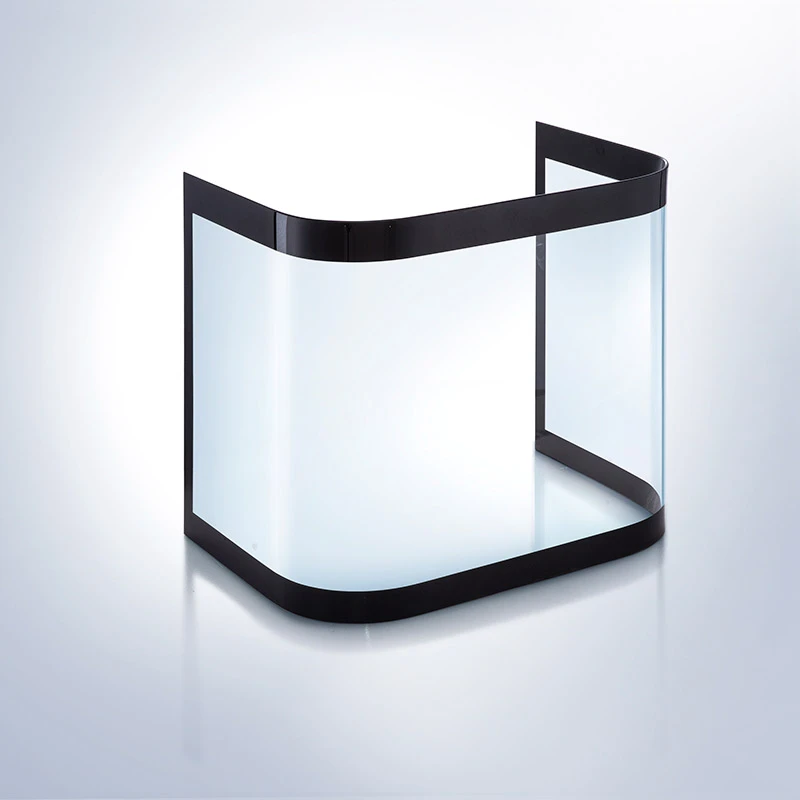
Different cabinet temperature zones call for different glass configurations. Refrigerated cabinets (0-10°C) perform well with standard argon-filled IGUs. Freezer cabinets (-18°C) benefit from adding Low-E coating on top of argon filling. Deep-freeze applications (-25°C and below) require the full stack: Low-E coating + argon filling + ITO electrical heating for anti-fog performance.
For wine cooler cabinets, thermal stability is critical for preserving wine quality. Our argon-filled Low-E IGUs minimize external heat infiltration, helping maintain consistent internal temperatures while reducing compressor cycling frequency. For supermarket freezer applications, see our Refrigerator Glass Door range for customizable options.
Q: Will the argon gas leak out over time?
A: Quality IGUs use dual-seal technology (butyl + polysulfide/silicone), achieving annual leakage rates below 1%. Huayin's fully automated IGU line includes online argon concentration monitoring, ensuring fill rates above 90%. Over a 25-year service life, thermal performance degradation is negligible.
Q: Does Low-E coating reduce glass transparency?
A: High-transmission Low-E coatings achieve visible light transmittance of 88% or higher — virtually indistinguishable from uncoated glass to the naked eye. A subtle blue-green reflection may be visible at certain angles, which actually enhances the premium appearance of the glass.
Q: Can I upgrade existing air-filled IGUs to argon + Low-E?
A: No. Insulated glass units are hermetically sealed systems — argon cannot be added and Low-E coating cannot be applied post-production. Upgrading requires replacing the entire IGU. We recommend specifying Low-E + argon filling in the technical requirements during new product development to avoid costly retrofitting later.
Huayin Glass Solutions operates a fully automated IGU production line and in-house coating facility in Foshan, Guangdong — enabling one-stop completion of Low-E coating, argon filling, IGU assembly, tempering, and curved bending under one roof. Every product is manufactured to ISO 9001:2015 and China 3C certified standards, exported to 50+ countries across five continents. Whether you are developing a new energy-efficient freezer line or upgrading existing cabinet specifications, we deliver the optimal glass configuration for your thermal performance targets.
We do not sell off-the-shelf glass. We engineer energy-saving solutions to your exact specifications.
Request a Quote: Online Inquiry | Website: huayinglass.com
Huayin Glass Solutions — 25 Years of Custom Glass Deep Processing | Foshan, Guangdong, China | Low-E Insulated Glass | Wine Cooler Glass | OEM/ODM Manufacturing | Export to 50+ Countries
Add:No. 16 Xingye Road, Beijiao Town Industrial Park, Shunde District, Foshan City, Guangdong Province
PHONE: +86 13509957538
TEL: +86 0757-26131933
Email: huayin_glass@163.com

© 2026 Huayin Glass Solutions All Rights Reserved.


