


 Add:No. 16 Xingye Road, Beijiao Town Industrial Park, Shunde District, Foshan City, Guangdong Province
 PHONE: +86 13509957538
 TEL: +86 0757-26131933
 Email: huayin_glass@163.com

Chinese


UV-resistant commercial freezer glass doors are becoming a standard specification for beverage coolers, ice cream freezers, and retail display cabinets installed near storefront windows or under strong LED lighting. Ultraviolet radiation does more than fade packaging — it accelerates sealant aging, yellowing of butyl rubber, and thermal stress cycling in the insulated glass unit (IGU). Over a 5-7 year service life, these effects can degrade both appearance and energy performance. Huayin Glass Solutions, a 25-year OEM/ODM glass deep-processing partner in Foshan, Guangdong, explains how the right glass composition, coatings, and assembly discipline protect commercial freezer glass door durability in high-UV environments.
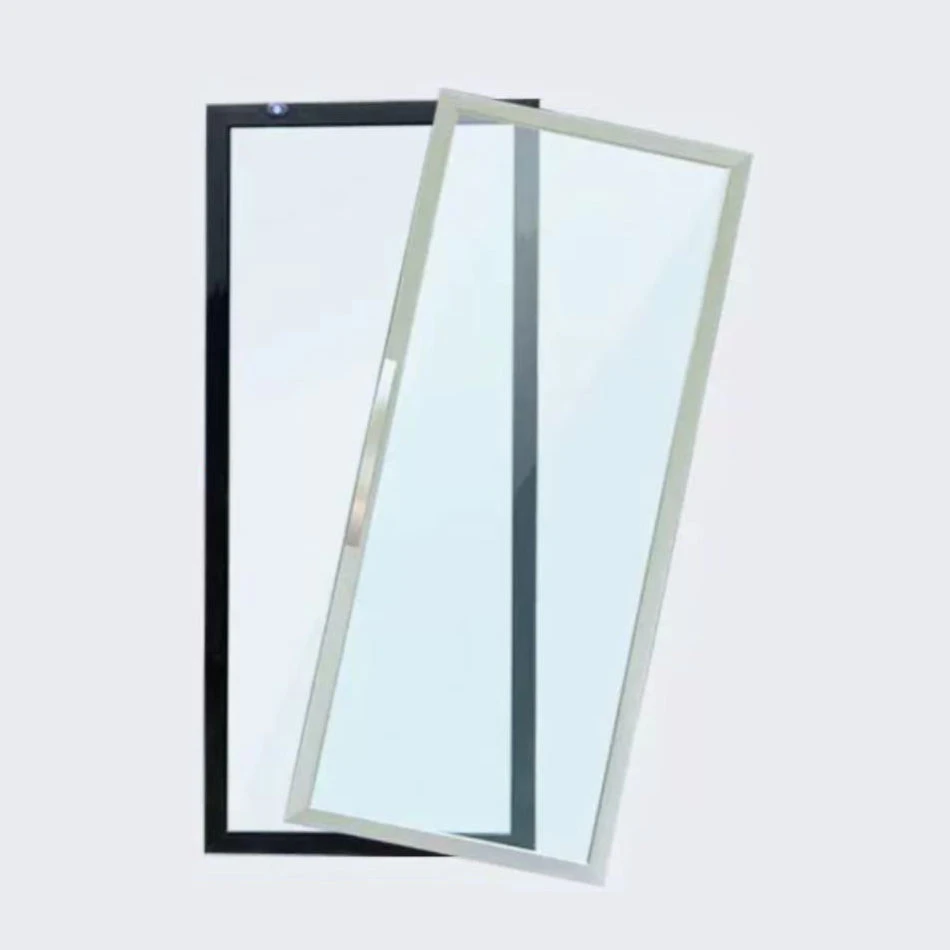
Freezer glass doors in retail locations are exposed to three UV sources:
Sunlight through storefront glass: unfiltered UVA reaches 315-400nm and penetrates standard soda-lime glass
High-CRI LED spotlights: modern retail lighting emits a small but continuous UV-A/blue-light component
Reflection from polished floors: reflective surfaces can amplify localized UV intensity by 20-40%
The cumulative effect is not just cosmetic. UV-driven temperature differentials across the glass surface increase thermal stress cycles. Sealants exposed to UV without proper edge coverage harden and lose elasticity, raising the risk of argon leakage and internal fogging. For OEMs, this translates into higher warranty claims and shorter replacement cycles.
Effective UV resistance in freezer glass doors relies on a layered approach: substrate selection, functional coatings, and edge protection.
Standard clear float glass blocks most UV-B but transmits roughly 75-85% of UV-A. For applications with direct sun exposure, Huayin recommends either:
Bronze or gray tinted outer lite: reduces total UV transmission to 30-50% while maintaining acceptable visible light transmittance
UV-cut clear glass: special batch composition absorbs up to 95% of UV-A without visible tint
Modern Low-E coatings, especially those with multiple silver layers, reflect not only infrared but also a significant portion of UV radiation. When positioned on the outer lite's indoor-facing surface (surface #2), the coating reduces both heat gain and UV load entering the IGU cavity.
UV damage often concentrates at the edges where sealant is directly exposed through the glass perimeter. A full-coverage ceramic frit border baked at 680-720°C seals the edge zone from direct UV and provides a durable, scratch-resistant finish that outlasts organic paints by decades.
| Feature | Standard Clear IGU | UV-Resistant Low-E IGU |
|---|---|---|
| UV-A transmission | 75-85% | 15-35% |
| Sealant UV exposure | Direct | Shielded by coating and frit |
| Product fading risk | High | Low |
| Expected service life | 5-6 years | 8-12 years |
| Energy performance | U-value 2.3-2.8 | U-value 0.9-1.4 |
| Best suited for | Interior, low-UV stores | Storefront, bright lighting, warm climates |
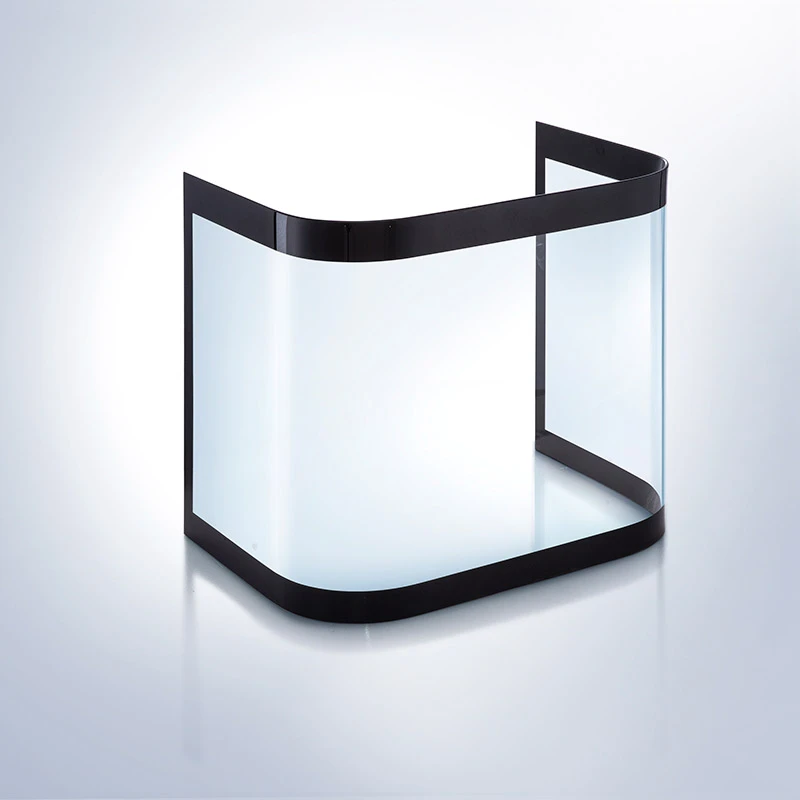
Most freezer glass door field failures begin at the edge. UV exposure accelerates butyl oxidation, and repeated thermal cycling opens micro-gaps between the sealant and spacer. Huayin's assembly protocol for UV-resistant units includes:
Dual-seal construction: polyisobutylene primary seal plus polysulfide or silicone secondary seal
Stainless steel or composite warm-edge spacer: lower thermal conductivity than aluminum, reducing condensation and thermal stress
Full ceramic frit coverage over seal line: blocks direct UV at the most vulnerable perimeter
Controlled cure cycle: 48-hour constant-temperature cure before any handling or stacking
Every production batch is sampled for butyl adhesion peel strength and helium leak rate. Targets are set at ≥6 N/mm peel strength and ≤1% annual gas loss rate.
Not every freezer door needs the highest level of UV protection. Huayin recommends matching the specification to the installation environment:
Convenience stores with south-facing windows: UV-cut clear + double-silver Low-E + full frit border
Supermarkets with strong overhead LED arrays: standard clear + single-silver Low-E + partial frit
Warm, high-humidity regions: add ITO heated glass to prevent condensation without increasing UV load
Outdoor or semi-outdoor ice cream cabinets: laminated outer lite for impact safety plus UV-interlayer
Q: Does UV-resistant glass reduce product visibility?
A: Modern UV-cut clear glass and single-silver Low-E coatings maintain 78-85% visible light transmittance. Tinted options reduce it to 60-70%, which is still acceptable for most beverage and frozen-food displays.
Q: Can UV protection be added to an existing freezer door design?
A: Yes, usually by switching the outer lite to UV-cut glass and applying a Low-E coating. Frame and gasket compatibility must be re-verified. Huayin provides redesign support and sample validation.
Q: How much longer will a UV-resistant IGU last compared to a standard one?
A: In high-UV environments, the service life typically extends from 5-6 years to 8-12 years, depending on operating temperature cycles and maintenance conditions.
Q: Is UV resistance required by energy-efficiency regulations?
A: Not directly, but many regulations indirectly favor it. For example, EU EPREL and U.S. DOE test procedures reward lower U-values, and Low-E coatings that block UV also improve thermal performance.
Founded in 2002 in Foshan, Guangdong, Huayin Glass Solutions operates a 6,000+ sqm ISO 9001:2015, China 3C, and High-Tech Enterprise certified facility. We specialize in custom commercial freezer glass doors, wine cooler glass, pastry display cabinet glass, and home appliance glass panels for OEM/ODM customers across 50+ countries.
Our UV-resistant glass program combines UV-cut substrates, multi-silver Low-E coatings, ceramic frit borders, argon-filled IGUs, and warm-edge spacers — all manufactured under lot-traceable quality control. We support customers from drawing review, DfM feedback, and prototype sampling through to mass production and export packaging.
Get a quote: contact the Huayin Glass team for a free UV-resistance specification review and sample report. Visit our manufacturing capabilities page for full process details.
Further reading: Freezer Glass Series | Supermarket Freezer Glass | Refrigerator Glass Door Options | About Huayin Glass | ITO Glass vs Defog Coating
About Huayin Glass Solutions: Founded in 2002 in Foshan, Guangdong, China, Huayin Glass Solutions is a 25-year custom glass deep-processing OEM/ODM partner specializing in ITO transparent conductive heated glass, multi-radius hot-bent tempered glass, Low-E energy-saving insulated glass, commercial freezer glass doors, home appliance glass panels and freezer door accessories. ISO 9001:2015, China 3C, High-Tech Enterprise certified, exporting to 50+ countries. More at https://www.huayinglass.com/ or the Chinese site https://www.huayinglass.cn/.
Add:No. 16 Xingye Road, Beijiao Town Industrial Park, Shunde District, Foshan City, Guangdong Province
PHONE: +86 13509957538
TEL: +86 0757-26131933
Email: huayin_glass@163.com

© 2026 Huayin Glass Solutions All Rights Reserved.


