


 Add:No. 16 Xingye Road, Beijiao Town Industrial Park, Shunde District, Foshan City, Guangdong Province
 PHONE: +86 13509957538
 TEL: +86 0757-26131933
 Email: huayin_glass@163.com

Chinese


Designing a commercial freezer glass door that survives the trip from engineering drawing to mass production is harder than it looks. A single overlooked tolerance on edge clearance, IGU cavity width, or hardware mounting can trigger weeks of rework, scrap costs, and missed delivery windows. This article walks through the eight most common DFM (Design for Manufacturing) mistakes that derail freezer glass door projects—and shows how a structured DFM review at the supplier level prevents them.
For B2B procurement managers, R&D engineers, and overseas sourcing teams, this checklist provides an engineering framework to align your design intent with what is actually manufacturable at scale.
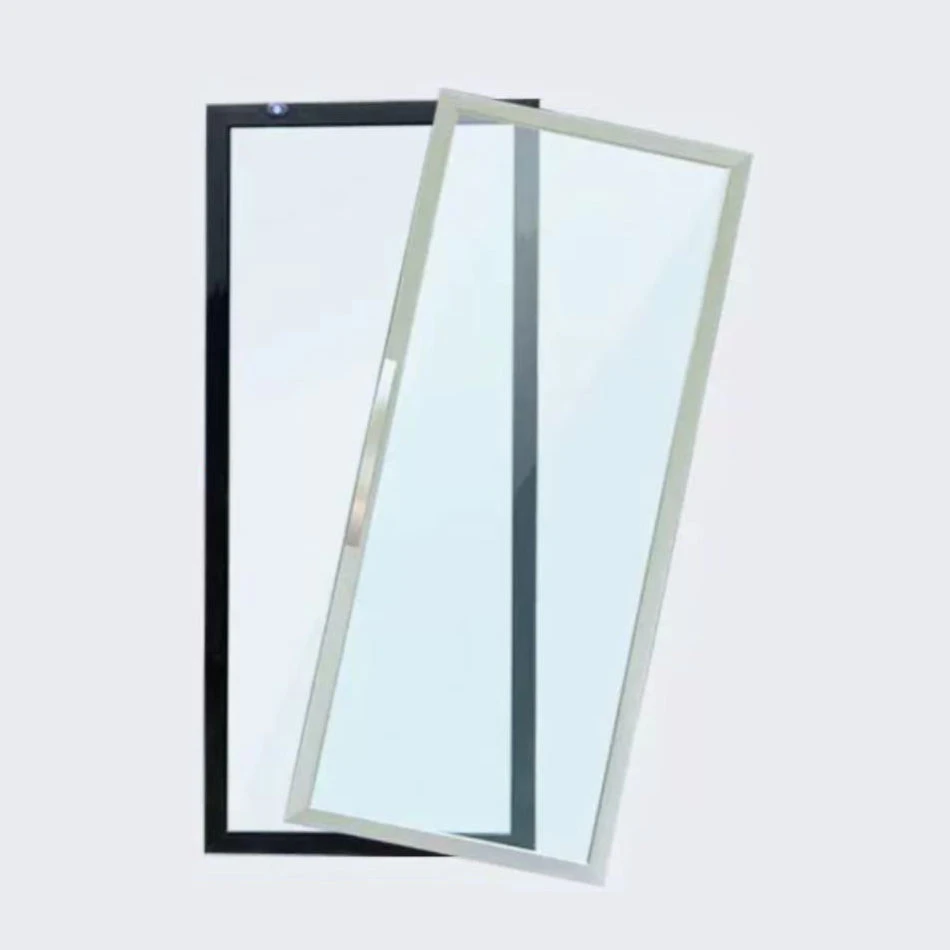
A commercial freezer glass door is a multi-component assembly: tempered or laminated glass, IGU spacer, desiccant, sealant, anti-fog film or ITO heating layer, gaskets, hinges, and frame hardware. Each interface is a tolerance stack-up. If the cumulative tolerance exceeds the design window, the door fails to seal, fogs up in service, or cannot be installed on the customer's production line.
For an OEM/ODM freezer glass supplier like Huayin Glass, the DFM review happens before tooling is committed. Catching dimension mismatches at the drawing stage costs minutes; catching them at the assembly line costs weeks. The eight mistakes below are the ones we see most often in incoming customer drawings.
A 4mm tempered lite is fine for a small reach-in door, but the same 4mm lite will flex on a 1200×2000mm multi-deck display door. Deflection under wind load or impact will cause seal failure and fogging. The table below shows our recommended starting thicknesses.
| Door Size (W × H) | Recommended Structure | Use Case |
|---|---|---|
| ≤600 × 800 mm | 4mm tempered + 12A + 4mm tempered | Compact reach-in |
| 600 × 1200 mm | 5mm tempered + 12A + 5mm tempered | Standard upright |
| 1200 × 2000 mm | 6mm tempered + 15A + 6mm tempered | Multi-deck display |
| 2000 × 2500 mm | 8mm tempered + 15A + 8mm tempered | Outdoor / heavy-duty |
Tempered glass expands and contracts. The frame groove must allow 2-3mm clearance on each side, plus extra room at the corners for the desiccant-loaded spacer. Tight tolerances may look elegant in CAD, but they will crack the glass during thermal cycling or break the IGU primary seal. Reserve at least 5mm total expansion room per linear meter of glass edge.
Drilled holes for hinges, handles, and lock cylinders must be specified with positional tolerance (typically ±0.5mm) and edge distance (minimum 1.5× the glass thickness). Errors here force the entire batch to be re-tempered, since tempered glass cannot be re-drilled. We provide a standard hardware library for our freezer glass door line; any custom hardware should reference hole patterns from this library.
The IGU cavity is not just insulation—it is also a pressure-equalization chamber. If the cavity is fixed at 12A but the door is destined for high altitude, the pressure differential will bow the glass inward. Specify cavity width by climate zone: 12A for ≤1500m, 15A for 1500-3000m, 20A above 3000m.
Buyers often copy a European spec sheet for a Southeast Asian project. The result: 12A cavities that over-insulate in tropical climates, leading to IGU pillow effect. Match cavity width to the maximum altitude and dominant climate of the destination market. Our commercial freezer glass engineering team can validate this for any project.
For freezer doors that need anti-fog performance, the ITO bus bar routing, lead-wire exit point, and connector type must be defined in the drawing—before the glass is tempered. Adding these features after the fact requires expensive rework. The drawing should show ITO active area, silver-paste bus bar geometry, and a clearly marked lead-wire exit notch.
Sealant adhesion depends on edge finish. A rough arrised edge holds more sealant mechanically, but a polished edge with micro-cracks will cause adhesive failure under thermal stress. Specify edge type explicitly: arrised for IGUs, fine polished for exposed decorative edges, pencil-polished for sliding door tracks. For reference on our edge finishing capabilities, see our accessories and edge series catalog.
Export projects to the EU, US, and Middle East all require specific compliance evidence: CE/EN 12150 for tempered glass, IGCC/IGMA for IGU certification, REACH for chemical content, and country-specific food contact statements. The drawing should reference which standards apply. Our manufacturing team can issue a compliance matrix during the DFM review.
Every freezer glass door project that comes through our Foshan factory passes through a structured 5-step DFM review before any glass is cut. The five steps are:
Drawing intake and tolerance review against our process capability window
Hardware library cross-check for hinges, handles, and lock cylinders
Climate zone and altitude validation for IGU cavity width
Anti-fog / heating element routing and connector selection
Compliance matrix generation for the destination market
For OEM/ODM partners, the output of this review is a 4-6 page DFM report with annotated drawings, recommended adjustments, and a clear go/no-go for production. We typically complete the review within 3 business days. To start a DFM review for your project, contact our sales team or visit our featured projects portfolio to see examples of past work.
Q: How long does a typical DFM review take?
A: For standard freezer glass door drawings, our DFM review is completed within 3 business days. Complex custom projects with ITO heating layers, gas fills, or laminated structures may take 5-7 days.
Q: Can you accept drawings from customers who do not have in-house glass engineers?
A: Yes. Many of our OEM customers send us hand sketches or basic dimensioned drawings. Our engineering team converts these into production-ready drawings and signs off on the design intent together with you before tooling is committed.
Q: What is the minimum order quantity for a custom freezer glass door project?
A: For custom designs, the sampling MOQ is typically 20-50 units. Mass production MOQ is 200-500 units depending on complexity. We also support hybrid orders where standard door sizes are mixed with custom components.
Q: Does Huayin Glass help with installation tooling and jigs?
A: Yes. We provide installation jigs and assembly fixtures for first-article production. For ongoing production, we can also supply a test rig that simulates your cabinet door frame to validate the door before it leaves our factory.
Further reading: Commercial freezer glass · Freezer glass door assembly · Curved glass for display cabinets · Manufacturing capabilities · ITO vs anti-fog coating comparison
Huayin Glass Solutions — Established 2002 in Foshan, Guangdong, China. 6,000+ sqm factory, ISO 9001:2015 and China CCC certified, serving 50+ countries across Southeast Asia, the Middle East, Africa, Central and South America, North America, and Europe. Core business: high-end custom glass deep-processing for OEM/ODM partners, including freezer glass doors, curved tempered glass, home appliance glass panels, ITO heated anti-fog glass, Low-E insulated glass, and the full freezer accessory range. Visit About Us or Contact, or browse all products and client case studies.
Add:No. 16 Xingye Road, Beijiao Town Industrial Park, Shunde District, Foshan City, Guangdong Province
PHONE: +86 13509957538
TEL: +86 0757-26131933
Email: huayin_glass@163.com

© 2026 Huayin Glass Solutions All Rights Reserved.


