


 Add:No. 16 Xingye Road, Beijiao Town Industrial Park, Shunde District, Foshan City, Guangdong Province
 PHONE: +86 13509957538
 TEL: +86 0757-26131933
 Email: huayin_glass@163.com

Chinese


Freezer glass door maintenance is the most overlooked cost driver in commercial refrigeration fleet management. While procurement teams obsess over upfront unit price and U-value specifications, the total cost of ownership (TCO) is often dominated by unplanned downtime, emergency repairs, and expedited spare parts shipping. After 25 years of supplying commercial freezer glass door assemblies to 50+ countries, Huayin Glass has observed that operators with a structured predictive maintenance program achieve 40-60% lower annual glass-door-related downtime compared to those using reactive break-fix strategies. This guide explains how to build a spare parts classification system, set replacement cycles, and negotiate OEM after-sales support that keeps your fleet running.
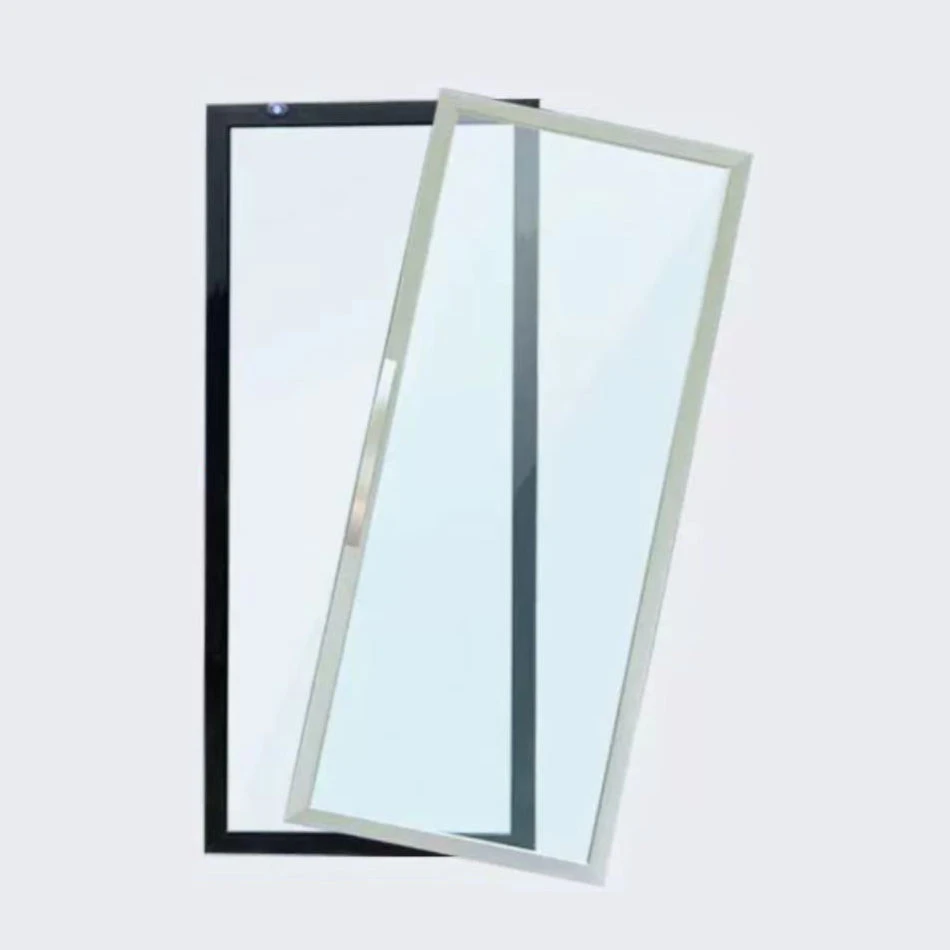
Reactive maintenance means waiting for a freezer glass door to fail before acting. Common failure modes include IGU seal degradation (argon leakage leading to internal condensation), hinge fatigue (door sagging and gasket compression loss), ITO heating circuit open-circuit (defog failure in high-humidity climates), and gasket compression set exceeding 20% (air infiltration and frost buildup). Each unplanned failure in a supermarket or convenience store can trigger a 48-72 hour emergency procurement cycle, during which the cooler must be taken offline or operated with compromised insulation.
For a fleet of 500 display cabinets, industry data suggests 8-12% annual door failure rate under reactive maintenance. At an average emergency replacement cost of $280-420 per door (including expedited air freight, technician overtime, and lost product), that translates to $112,000-252,000 in unplanned annual spend. A predictive program cuts this by prioritizing inspection and scheduled replacement before failure occurs.
Not all fleets benefit from the same maintenance approach. Your climate, cabinet age distribution, and uptime requirements should dictate the strategy:
| Strategy | Approach | Best For |
|---|---|---|
| Reactive (Break-Fix) | Replace parts only after visible failure | Small fleets under 50 units, low-budget operations |
| Preventive (Time-Based) | Replace on fixed calendar schedule | Medium fleets 50-200 units, standard climates |
| Predictive (Condition-Based) | Monitor condition metrics and replace before failure | Large fleets 200+ units, critical uptime requirements |
Huayin Glass recommends predictive maintenance for any fleet over 100 units or operating in tropical/high-humidity climates where IGU seal stress and gasket aging are accelerated.
A well-organized spare parts program starts with classification. We recommend the ABC method adapted for refrigerator glass door fleets:
Class A — Critical Parts (long lead time, high impact): IGU panels, complete door assemblies, and custom aluminum frames. These typically have 4-6 week manufacturing lead times and should be kept in regional stock at 2-3% of fleet size. Replacement cycle: 8-12 years for IGU, 10-15 years for frames.
Class B — Important Parts (moderate lead time, moderate impact): Self-closing hinges, magnetic door gaskets, LED light strips, and digital temperature controllers. Lead time 1-3 weeks. Stock at 5-8% of fleet size. Replacement cycle: 3-5 years for gaskets, 5-7 years for hinges and LEDs.
Class C — Consumables (short lead time, low individual impact): Wire shelves, caster wheels, adjustable leveling feet, and fan motors. Lead time under 1 week. Stock on demand. Replacement cycle: 1-3 years depending on load and floor conditions.
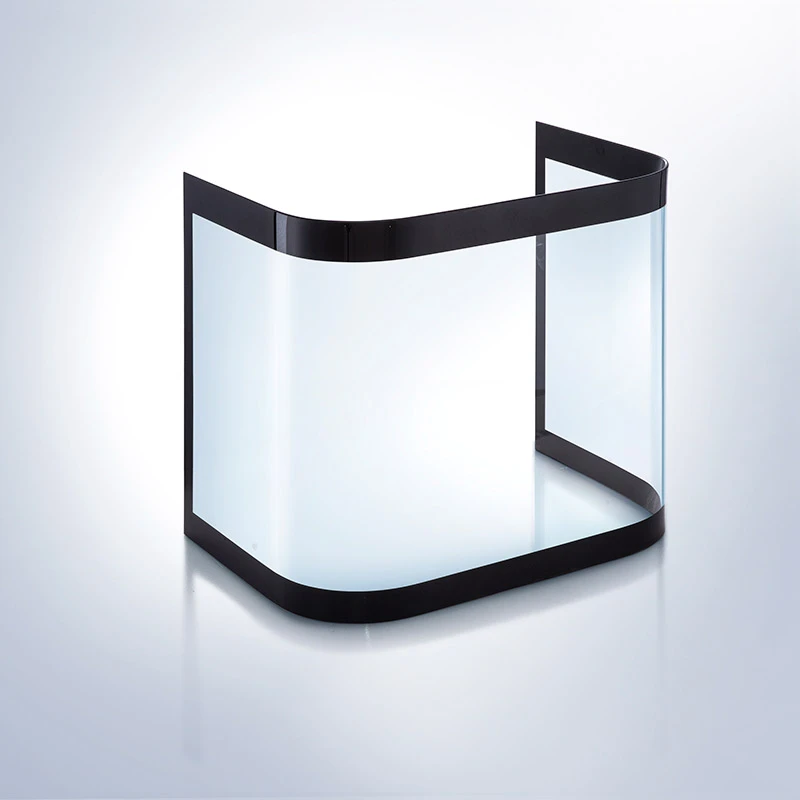
The transition from preventive to predictive maintenance requires data. We recommend fleet operators track three metrics per cabinet: door open/close cycle count (via hinge-mounted sensor or cooler controller data), IGU cavity dew point trend (annual spot-check with portable dew-point meter), and gasket compression set percentage (feeler-gauge measurement at four corners annually). When any metric crosses 80% of its failure threshold, the part enters the "pre-failure" queue and is replaced at the next scheduled service window.
Huayin Glass supports predictive programs with three OEM services: serialized production batch tracking (every IGU panel carries a unique barcode linking to its argon-fill record, heat-soak test certificate, and bus-bar resistance log), regional spare parts consignment inventory (we hold Class A and B stock at bonded warehouses near major ports), and annual fleet health audits (remote video inspection plus replacement recommendation report). Contact our About Us team to set up a consignment agreement.
When sourcing freezer glass door assemblies, maintenance costs are determined largely by what you negotiate before signing the PO. Key terms to lock in:
IGU seal warranty: Minimum 10 years against argon leakage and internal condensation.
ITO heating circuit warranty: Minimum 5 years against open-circuit or resistance drift beyond ±10%.
Spare parts availability guarantee: Supplier must commit to 10-year parts availability post end-of-production.
8D report turnaround: For field failures, supplier provides root-cause analysis within 5 working days.
Technical support: Remote commissioning support and installation video library access.
Huayin Glass standard terms include 10-year IGU seal coverage, 5-year ITO circuit coverage, and lifetime technical support for all OEM/ODM partners.
Q: How do I know when an IGU seal has failed?
A: The earliest sign is internal fogging that does not clear when the cooler cycles off. Use a portable dew-point meter on the glass surface; if the reading is above -30°C while the cooler is at design temperature, argon has likely leaked and the IGU should be replaced.
Q: Can I replace just the gasket, or do I need a full door assembly?
A: Magnetic door gaskets are designed for field replacement. Most Huayin Glass gaskets use snap-in or magnetic-retention profiles that a technician can swap in 15 minutes without tools. For frame or hinge damage, the full assembly may be required.
Q: What is the typical service life of a commercial freezer glass door?
A: With proper maintenance, 12-15 years for the IGU panel, 8-10 years for hinges, and 3-5 years for gaskets in normal climates. Tropical/high-humidity environments reduce gasket life to 2-3 years.
Q: Does Huayin Glass provide installation training?
A: Yes. Every major OEM project includes an installation manual, commissioning video, and optional on-site or video-call training. We also provide a 30-day observation checklist for field technicians. Reach us through the contact page to schedule training.
Freezer glass door maintenance should be treated as a strategic operations program, not an afterthought. By classifying spare parts into critical, important, and consumable tiers; setting data-driven replacement cycles; and negotiating strong warranty terms upfront, fleet operators can cut unplanned downtime by half and extend the useful life of every cabinet. Huayin Glass supplies more than glass door assemblies — we supply the engineering support, spare parts logistics, and predictive maintenance frameworks that keep commercial refrigeration fleets running at peak efficiency.
Ready to set up a predictive maintenance program for your freezer glass door fleet? Browse our product catalog or request a custom spare parts proposal through our contact page.
Further Reading: Commercial Freezer Glass · Accessories Series · Supermarket Freezer Glass · Manufacturing Capabilities · Client Cases
Huayin Glass Solutions, established 2002 in Beijiao Town, Shunde District, Foshan City, Guangdong Province, China. 6,000+ m² deep-processing facility within 30 km of three major export ports (Beijiao, Nansha, Huangpu). ISO 9001:2015, China CCC, and High-Tech Enterprise certified. OEM/ODM custom glass door assemblies exported to 50+ countries across Southeast Asia, the Middle East, Africa, Central & South America, North America, and Europe.
Add:No. 16 Xingye Road, Beijiao Town Industrial Park, Shunde District, Foshan City, Guangdong Province
PHONE: +86 13509957538
TEL: +86 0757-26131933
Email: huayin_glass@163.com

© 2026 Huayin Glass Solutions All Rights Reserved.


