


 Add:No. 16 Xingye Road, Beijiao Town Industrial Park, Shunde District, Foshan City, Guangdong Province
 PHONE: +86 13509957538
 TEL: +86 0757-26131933
 Email: huayin_glass@163.com

Chinese


Fogged glass doors are one of the most common complaints in commercial refrigeration. When warm, humid air hits a cold surface, condensation forms instantly, blocking product visibility and forcing shoppers to open the door more often. ITO heated glass solves this problem by turning the glass itself into a transparent heating element. In this guide, Huayin Glass Solutions explains how ITO conductive coatings work, where they outperform traditional defog films, and what buyers should know when sourcing commercial freezer glass from a China glass manufacturer.
Condensation on freezer doors is a simple physics problem. The inner glass surface is close to the refrigerated air temperature — often below 0°C — while the outer surface is exposed to ambient air at 20°C to 35°C with relative humidity of 60% to 90%. When humid air contacts the cold glass, water vapor condenses into tiny droplets that scatter light and obscure the view.
Traditional solutions include wiping the glass, installing heated wires, or applying hydrophilic anti-fog coatings. Each has limitations: manual wiping is labor-intensive, wire heaters create visible lines, and coatings wear off over time. ITO heated glass offers a cleaner, longer-lasting alternative by distributing heat evenly across the entire viewing area.
ITO stands for Indium Tin Oxide, a transparent conductive oxide that can be deposited as a thin film on glass or plastic. When an electrical current passes through the ITO layer, the film generates heat due to electrical resistance. Because the coating is only nanometers thick and highly transparent, it does not noticeably reduce visibility.
In a typical commercial freezer glass door assembly, the ITO film is applied to the inner surface of the outer lite in a double-pane or triple-pane insulated glass unit. Electrodes run along the edges of the glass, connected to a low-voltage controller. When the door is closed and powered, the ITO layer maintains the outer glass surface above the dew point, preventing fog formation.
Huayin Glass Solutions has developed its own ITO coating processes for refrigerator glass doors, with particular expertise in large-format supermarket freezer doors and curved display cabinet applications.
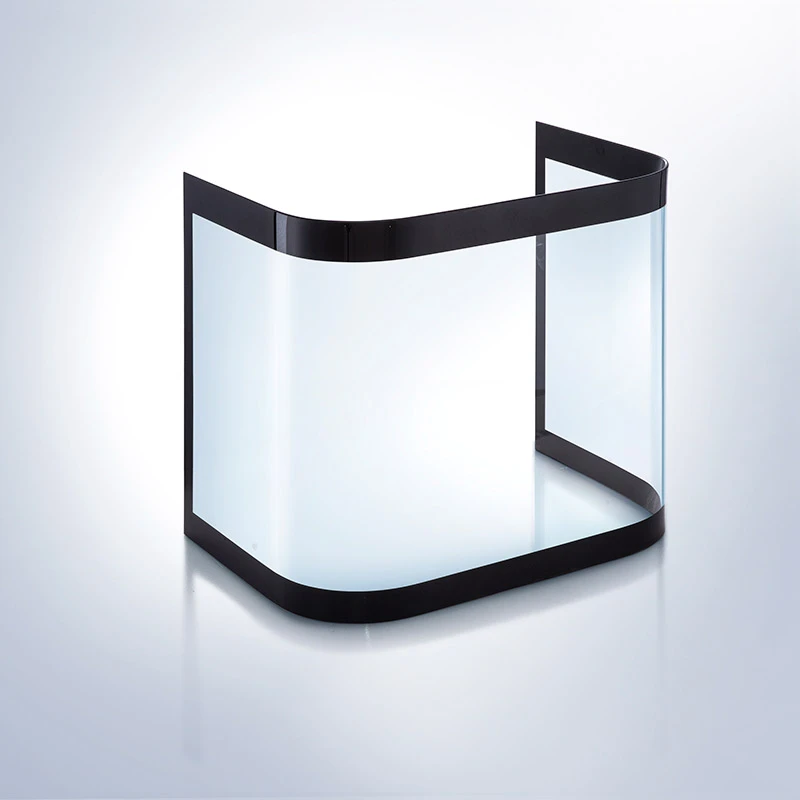
The performance of an ITO heated glass panel depends on three key parameters:
Sheet resistance, measured in ohms per square (Ω/sq), determines how much heat the coating generates at a given voltage. Lower sheet resistance produces more heat but requires higher current. Typical values for heated glass range from 5 Ω/sq to 100 Ω/sq, depending on the application.
Power density, expressed in watts per square meter (W/m²), controls how quickly the glass warms up. For freezer doors, common values are 200 W/m² to 600 W/m². Higher power densities clear fog faster but increase energy consumption and require larger controllers.
A high-quality ITO coating should transmit at least 80% of visible light, and often more than 85%. Lower transmission reduces product visibility, which defeats the purpose of a display door. Advanced coatings balance conductivity and transparency by adjusting the film thickness and stoichiometry.
At Huayin Glass Solutions, every ITO heated glass panel is tested for sheet resistance, uniformity, and optical transmission before assembly into a finished commercial supermarket freezer glass door.
Buyers often ask whether ITO coating is worth the extra cost compared to standard defog films or anti-fog sprays. The table below compares the main options:
| Feature | ITO Heated Glass | Traditional Defog Film / Spray |
|---|---|---|
| Heating uniformity | Even heat across the entire glass surface | Films may create visible stripes; sprays are passive |
| Visibility | Transparent coating, minimal optical impact | Films can haze; sprays wear off and streak |
| Durability | Sealed inside the insulated glass unit, lasts 10+ years | Films may delaminate; sprays require reapplication |
| Energy use | Controlled power input, can be thermostatically regulated | Passive films consume no power but offer limited performance |
| Best suited for | High-traffic commercial freezer and display cabinet doors | Budget units, low-humidity regions, temporary displays |
For premium commercial refrigeration, ITO heated glass is generally the better long-term investment. It preserves product visibility, reduces door-open frequency, and supports consistent brand presentation.
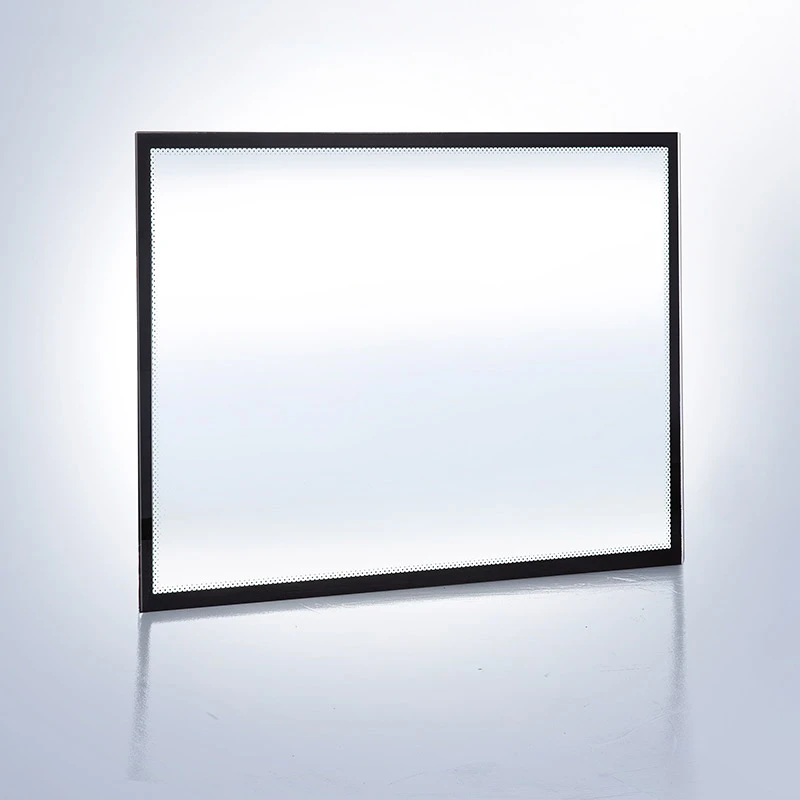
ITO heated glass is used across a wide range of commercial refrigeration products. Common applications include:
Supermarket upright freezers: Large glass doors that must stay clear under constant shopper traffic and store humidity.
Beverage coolers: Glass-door merchandisers where product visibility directly drives impulse sales.
Wine coolers: High-end display units that require both aesthetics and anti-fog performance. See wine cooler cabinet glass options.
Pastry and cake display cabinets: Curved or flat glass panels that must resist condensation without blocking the product view.
Medical and laboratory refrigeration: Applications where visibility and temperature stability are both critical.
In each case, the value proposition is the same: maintain a clear, attractive display while minimizing energy waste from unnecessary door openings.
For international buyers, China offers a mature supply chain for custom ITO heated glass. However, not every glass processor can deliver consistent quality. Here is what to verify before placing an order:
Some factories outsource ITO coating to third parties, which creates quality control gaps. Prefer a supplier with internal coating lines and process engineering experience.
Request test data for sheet resistance, optical transmission, and thermal uniformity. A reliable supplier should also provide high-temperature/high-humidity aging test reports.
ITO coating is only one step. The supplier must also handle cutting, edging, tempering, bending, and insulated glass assembly. A vertically integrated factory reduces handling damage and dimensional tolerance issues.
Look for a partner that accepts custom sizes, shapes, electrode configurations, and controller specifications. OEM and ODM support is essential for appliance brands and cabinet manufacturers.
Huayin Glass Solutions operates a 6,000+ square meter facility in Shunde, Foshan, Guangdong, with ISO 9001:2015 certification and exports to more than 50 countries. The company offers custom ITO heated glass and defog glass solutions for refrigerator doors, display cabinets, and specialty appliances.

Q: Does ITO heated glass consume a lot of electricity?
A: Power consumption depends on the panel size and power density. A typical freezer door panel may use 50–150 watts, comparable to or lower than traditional wire heaters because the heat is distributed more efficiently.
Q: Can ITO coatings be applied to curved glass?
A: Yes, but the process is more complex than flat glass. Curved ITO heated glass requires careful control of film uniformity during bending and coating. Huayin specializes in combining thermally bent glass with ITO coatings for display cabinet applications.
Q: How long does ITO heated glass last?
A: When sealed inside an insulated glass unit, ITO coatings can last the lifetime of the door assembly — typically 10 to 15 years. External films and sprays generally have much shorter service lives.
Q: What voltage does ITO heated glass require?
A: Most commercial applications use low-voltage DC or mains AC, depending on the design. The supplier will specify the controller and wiring requirements based on the panel resistance and target power.
ITO heated glass is the most elegant solution available for keeping commercial freezer doors free of condensation. By embedding a transparent conductive film directly into the glass, manufacturers can deliver even heating, long service life, and excellent optical clarity in a single component.
For buyers sourcing custom heated glass or anti-fog freezer glass from China, the key is to partner with a vertically integrated supplier that controls both the coating process and the downstream glass fabrication. Huayin Glass Solutions, with 25 years of glass deep-processing experience, offers OEM/ODM ITO heated glass for refrigerator doors, wine coolers, cake cabinets, and supermarket freezer displays. To discuss your project or request samples, visit the contact page and send your specifications.
Further reading: ITO Glass vs Defogging Coating: A Technical Comparison · Manufacturing Capabilities
Add:No. 16 Xingye Road, Beijiao Town Industrial Park, Shunde District, Foshan City, Guangdong Province
PHONE: +86 13509957538
TEL: +86 0757-26131933
Email: huayin_glass@163.com

© 2026 Huayin Glass Solutions All Rights Reserved.


