


 Add:No. 16 Xingye Road, Beijiao Town Industrial Park, Shunde District, Foshan City, Guangdong Province
 PHONE: +86 13509957538
 TEL: +86 0757-26131933
 Email: huayin_glass@163.com

Chinese


Commercial refrigeration consumes a significant share of a retail chain's energy budget, and the glass door is often the weakest thermal link in the cabinet. Low-E insulated glass solves this by reflecting heat back into the room while letting visible light pass through, dramatically reducing the load on the compressor. For buyers sourcing commercial supermarket freezer glass from China, understanding Low-E technology is the first step to writing a specification that actually saves money over the product lifecycle.
Low-E stands for "low emissivity." It is a microscopically thin, transparent metallic coating applied to one surface of the glass. The coating reflects long-wave infrared radiation — in other words, heat — without blocking much of the visible light that shoppers need to see products inside the cabinet.
When Low-E coating is combined with two or more glass lites separated by a dehydrated air or gas space, the result is Low-E insulated glass. In commercial freezer applications, this is almost always a double-pane or triple-pane unit filled with argon and fitted with warm-edge spacer bars.
Huayin Glass Solutions, a China-based freezer glass manufacturer with 25 years of deep-processing experience, produces Low-E IG units for beverage coolers, cake displays, wine coolers and supermarket walk-in freezers. Our production line supports custom sizes, shapes, hole positions and silk-screen printing to match OEM customer drawings.
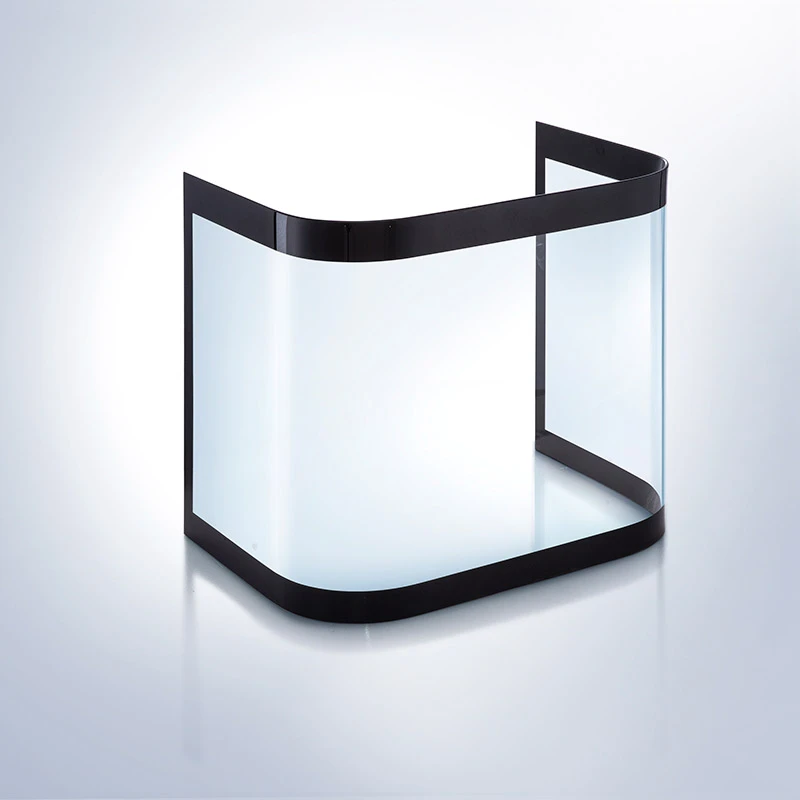
There are three ways heat moves through a freezer door: conduction, convection and radiation. Insulated glass handles conduction and convection well by adding a gas-filled gap, but standard clear glass still radiates heat inward. Low-E coating interrupts that radiative path.
The U-value measures how much heat passes through the whole unit. The lower the U-value, the better the insulation. A typical single-pane freezer glass panel might have a U-value above 5.5 W/(m²·K), while a high-performance Low-E freezer insulated glass door can achieve 1.5 W/(m²·K) or lower.
SHGC tells you how much solar radiation gets through. For upright freezer doors in bright retail environments, a lower SHGC keeps the cabinet cooler during peak daylight hours. Hard-coat Low-E products are typically chosen for freezer applications because they are durable enough to withstand the bending, cutting and tempering processes used in door manufacturing.
A well-built IG unit keeps the inner glass surface temperature above the dew point of the surrounding air, which stops condensation. For humid climates, this is often paired with an ITO heated glass layer to actively evaporate any residual fog. You can read more about the difference in our article on ITO glass vs anti-fog coatings.
A complete refrigerator glass door assembly is more than just two sheets of glass. Understanding each layer helps buyers write better RFQs and avoid quoting mismatches.
Outer lite: Usually clear tempered glass for impact resistance and customer visibility. It can be curved, screen-printed or fitted with aluminum frames depending on the door style.
Low-E coating: Applied on surface #2 (the indoor-facing side of the outer lite) in most upright freezer doors. Surface #3 is also common in some climates.
Gas fill: Argon is standard for freezer applications because it is inexpensive, inert and has lower thermal conductivity than air. Krypton performs better but costs significantly more.
Spacer and seal: Warm-edge spacers reduce conductive loss at the perimeter. Dual-seal systems using PIB and structural silicone give the unit a longer service life.
When an OEM customer orders pastry display cabinet glass from Huayin, our engineering team recommends the exact Low-E surface position, gas fill percentage and spacer type based on the target market's climate and energy-labeling rules.
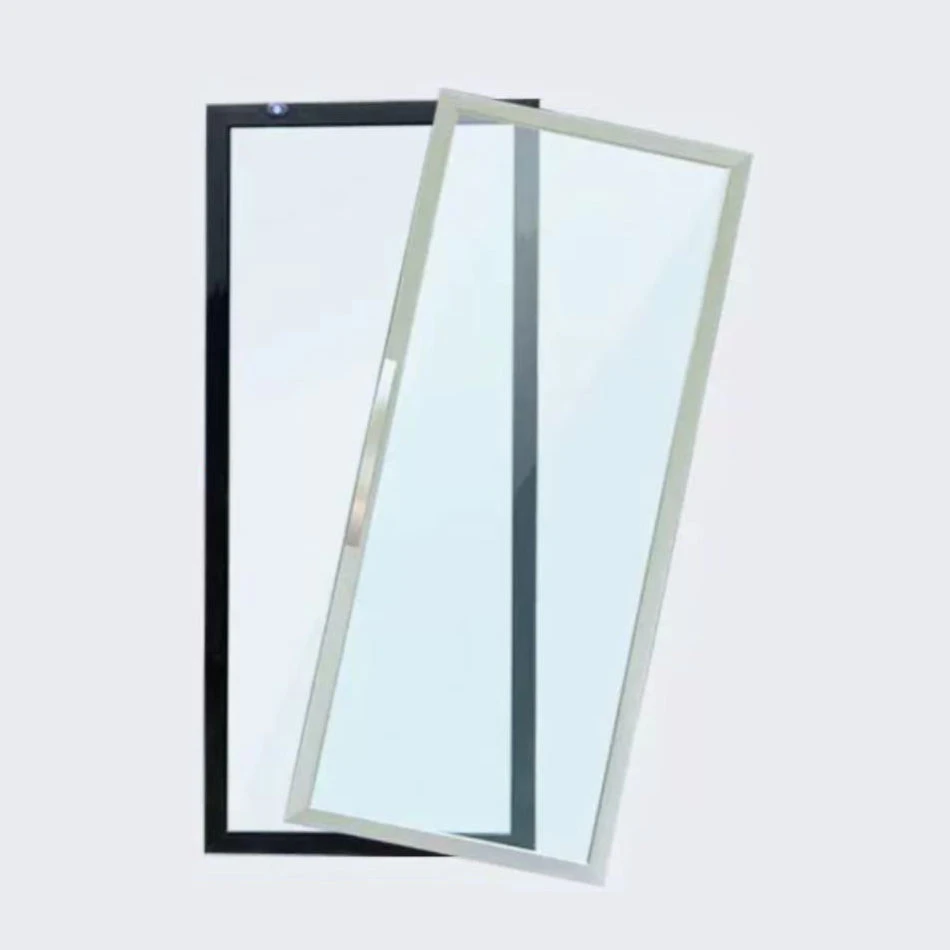
| Metric | Standard Insulated Glass | Low-E Argon-Filled IG |
|---|---|---|
| Typical U-value | 2.6–2.8 W/(m²·K) | 1.4–1.8 W/(m²·K) |
| Condensation resistance | Moderate | High |
| Visible light transmission | ~88% | ~80–85% |
| Compressor load | Higher | Reduced by 15–30% |
| Unit cost | Lower | Higher, but lower lifecycle cost |
The payback period for choosing Low-E over standard IG is usually well under two years for high-traffic supermarket freezer aisles. For smaller cake displays or wine coolers, the decision depends more on the retailer's energy-labeling requirements and brand positioning than on raw energy savings.
As a buyer, the clearer your specification, the fewer surprises you will face at incoming inspection. Include the following items in your technical agreement with any China insulated glass supplier:
Common freezer-door configurations are 4 mm + 9A + 4 mm or 5 mm + 12A + 5 mm. Triple-pane is used for deep-freeze or tropical markets. Specify whether the glass must be ultra-clear, tinted or screen-printed.
Ask for the emissivity value, U-value and SHGC test report. A reputable glass deep-processing factory can provide third-party test reports or factory-level inspection data for every batch.
Argon leaks out over time. A good unit should retain more than 80% of its initial gas fill after 10 years. Request accelerated aging test results and confirm the spacer and sealant brands used.
Freezer doors experience constant temperature swings. Specify that samples must pass thermal cycling, humidity resistance and ball-drop impact tests according to EN 1279, IGCC or equivalent local standards.
Q: Is Low-E glass the same as tinted glass?
A: No. Tinted glass reduces visible light and solar heat by absorption, while Low-E glass reflects infrared heat through a metallic coating. Low-E can be applied to clear, tinted or even curved glass.
Q: Can Low-E insulated glass be curved?
A: Yes. Hard-coat Low-E products generally survive the bending and tempering process better than soft-coat products. For curved freezer doors, Huayin applies the coating on the concave or convex surface based on the final assembly design.
Q: Does Low-E coating affect product visibility?
A: Modern Low-E coatings are nearly invisible. Visible light transmission typically drops by only 3–8%, which is acceptable for retail display applications.
Q: How do I verify gas fill in an IG unit?
A: Non-destructive gas analyzers using spark spectroscopy or tuneable diode laser absorption are the most common factory methods. Ask your supplier to include a gas-fill certificate with each shipment.
Low-E insulated glass is one of the highest-ROI upgrades a commercial freezer OEM or retail chain can specify. By reducing conductive and radiative heat transfer, it cuts compressor runtime, improves condensation resistance and helps products sell themselves through clearer, fog-free display.
When sourcing from a China commercial freezer glass supplier, look beyond unit price. Verify the Low-E performance data, gas retention claims and long-term seal durability before committing to volume. Huayin Glass Solutions offers custom Low-E IG design, prototype sampling and mass production from our 6,000+ m² facility in Foshan, Guangdong. We are ISO 9001:2015 certified and export to 50+ countries.
If you are planning your next freezer glass door project, contact our team for a sample quotation and technical review.
Further reading: Wine cooler cabinet glass OEM solutions · Curved tempered glass for commercial refrigeration
Add:No. 16 Xingye Road, Beijiao Town Industrial Park, Shunde District, Foshan City, Guangdong Province
PHONE: +86 13509957538
TEL: +86 0757-26131933
Email: huayin_glass@163.com

© 2026 Huayin Glass Solutions All Rights Reserved.


