

 Add:No. 16 Xingye Road, Beijiao Town Industrial Park, Shunde District, Foshan City, Guangdong Province
 PHONE: +86 13509957538
 TEL: +86 0757-26131933
 Email: huayin_glass@163.com

Chinese


Ultra-clear low-iron glass looks like a premium option on a quotation sheet, and it is. But between the quote and the installed cabinet sit six verification points that decide whether you actually receive the clarity you paid for.
Key takeaways
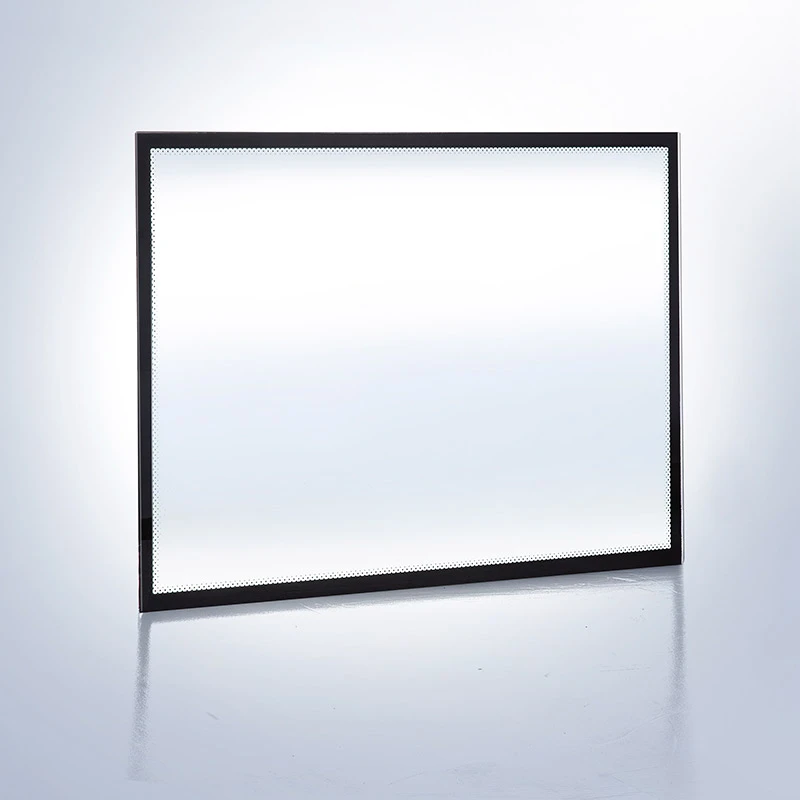
Standard float glass contains enough iron oxide to show a distinct green cast, most visible on polished edges and in a row of adjacent freezer doors. Low-iron glass strips most of that iron out, which is why premium display cabinets, wine cooler cabinets and pastry cases specify it: red meat, berries and wine labels keep their true colors behind the glass.
The catch is that "ultra-clear" is a marketing phrase, not a specification. Two suppliers can both write it on a quote while shipping visibly different products. That is why the six checks below are written as things to verify, not things to read.
Put these six lines into your RFQ and require document evidence for each. A factory that hesitates at any one of them is telling you something.
| Check | What to require | Red flag |
|---|---|---|
| 1. Iron content | Material report stating low-iron composition with actual value | "Ultra-clear" with no numbers behind it |
| 2. Visible transmittance | Test report for the exact thickness you order | Report from a different thickness or none at all |
| 3. Tempering quality | Fragmentation test and bow tolerance per standard, per batch | Tempering records available "on request" only after delivery |
| 4. Batch color difference | Written ΔE limit between production batches, in the contract | Verbal assurance that "every batch looks the same" |
| 5. Edge work | Polished edges with defined tolerance, especially on exposed edges | Rough-arised edges on a "premium" door |
| 6. Export packaging | Packing drawing: crates, corner protection, interlayer, moisture control | Loose packing quoted to hit a price target |
Documents constrain the supplier; samples constrain the truth. Order sample panels in your actual thickness and view them three ways: against a white background to read the edge tint, side by side with your current supplier's pane, and installed in a lit cabinet with the products you actually sell. A green edge invisible in a showroom becomes obvious in a wall of sixteen doors.
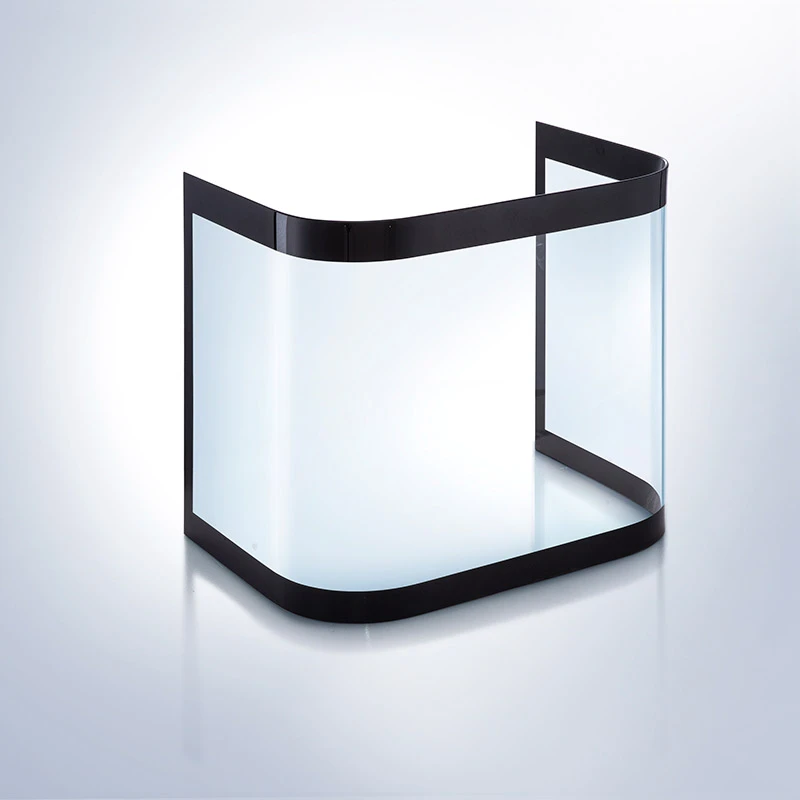
If your project uses curved tempered glass, add one more check: bending changes optical appearance, so sample the curved part, not a flat panel. Factories that bend and temper in-house on their own furnaces will show you curved samples without hesitation — ask to see their production line on video while the sample is in transit.
A single ultra-clear pane is easy. A cabinet line with sixty doors, shipped in three batches over six months, is where low-iron sourcing actually gets decided. Glass from different production lots can differ subtly in tint, and on a multi-door wall the difference reads as a defect.
Two contract clauses solve most of it: a ΔE color-difference limit between batches, and a commitment that one cabinet's doors ship from one production batch. Both cost the supplier planning discipline rather than money — a factory with its own melting or consistent raw-material sourcing can commit; a trader buying leftovers on the spot market cannot.
"Ultra-clear" without a transmittance and composition report is an unpriced risk. The report costs the supplier nothing to share if the glass is real.
Curved and tempered parts shift appearance. Approve the geometry you will actually install, including any hot bent glass elements in the same cabinet family.
In freezer insulated glass, the spacer and coating affect perceived clarity at the edge. A beautiful outer pane with a dark, mismatched spacer still reads as cheap. Specify the full unit, not just the pane.
Need low-iron samples for your display cabinet program? Contact Huayin Glass for a sample quotation — our engineers respond with a DFM assessment and can produce flat, curved, tempered and insulated ultra-clear panels under one roof. For background on our certifications and export record, see about us.
Further reading: Pastry display cabinet glass · ITO glass vs defogging coating · Client cases
Add:No. 16 Xingye Road, Beijiao Town Industrial Park, Shunde District, Foshan City, Guangdong Province
PHONE: +86 13509957538
TEL: +86 0757-26131933
Email: huayin_glass@163.com

© 2026 Huayin Glass Solutions All Rights Reserved.


