


 Add:No. 16 Xingye Road, Beijiao Town Industrial Park, Shunde District, Foshan City, Guangdong Province
 PHONE: +86 13509957538
 TEL: +86 0757-26131933
 Email: huayin_glass@163.com

Chinese


A buyer emails a spec sheet for a new commercial freezer glass door and the first question is always the same: how many panes do we actually need? The answer changes the unit cost, the frame depth, the weight, and the lifetime energy bill. Below we answer the six questions buyers ask most often before choosing freezer glass insulation for display cabinets and walk-in coolers.
Almost never for refrigerated or frozen display. A single pane of 4mm or 5mm tempered glass is strong and cheap, but it has almost no thermal resistance. The cold face inside the cabinet and the warm face outside create constant condensation and heavy heat gain.
Single-pane glass still appears in non-refrigerated display cases, room partitions, and some appliance viewing windows. For any cabinet holding products below ambient temperature, single-pane should be treated as a non-starter unless the application is purely decorative and climate-controlled.
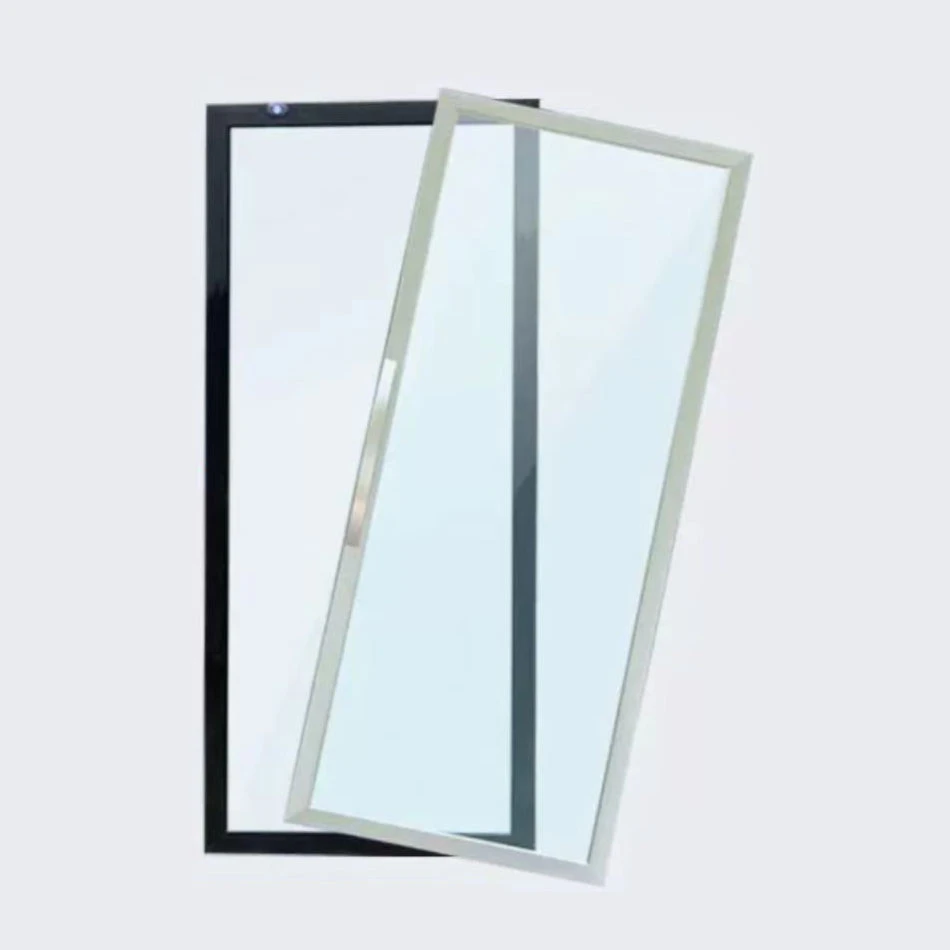
Double-pane, or insulated glass, adds a sealed air or gas gap between two sheets of tempered glass. This gap dramatically slows conductive heat transfer. A typical double-pane freezer door reduces external condensation and cuts compressor runtime compared with single-pane.
For standard upright display freezers, beverage coolers and cake cabinets operating at 0°C to +5°C, double-pane insulated glass is usually the right balance of performance and cost. It keeps the outer surface above the dew point in most retail environments and keeps the cabinet temperature stable.
Triple-pane adds a second cavity, giving three layers of glass and two insulated gaps. The upgrade makes sense when the cabinet runs below -15°C, when the store ambient humidity is high, or when energy tariffs are steep enough that the extra insulation pays back within two to three years.
| Configuration | Typical U-value | Best for | Relative cost |
|---|---|---|---|
| Single-pane tempered | ~5.7 W/m²K | Non-refrigerated displays | Baseline |
| Double-pane air-filled | ~2.8 W/m²K | Refrigerated cabinets, +0°C to +5°C | 1.4× |
| Double-pane Low-E argon | ~1.6 W/m²K | Freezers, high-humidity stores | 1.7× |
| Triple-pane Low-E argon | ~0.9 W/m²K | Low-temp freezers, energy-sensitive markets | 2.2× |
The table above shows approximate centre-of-glass U-values. Frame thermal bridges, gasket quality and door-seal compression will add to the real-world number, so the glass spec should be matched with an equally robust door gasket and hinge system.
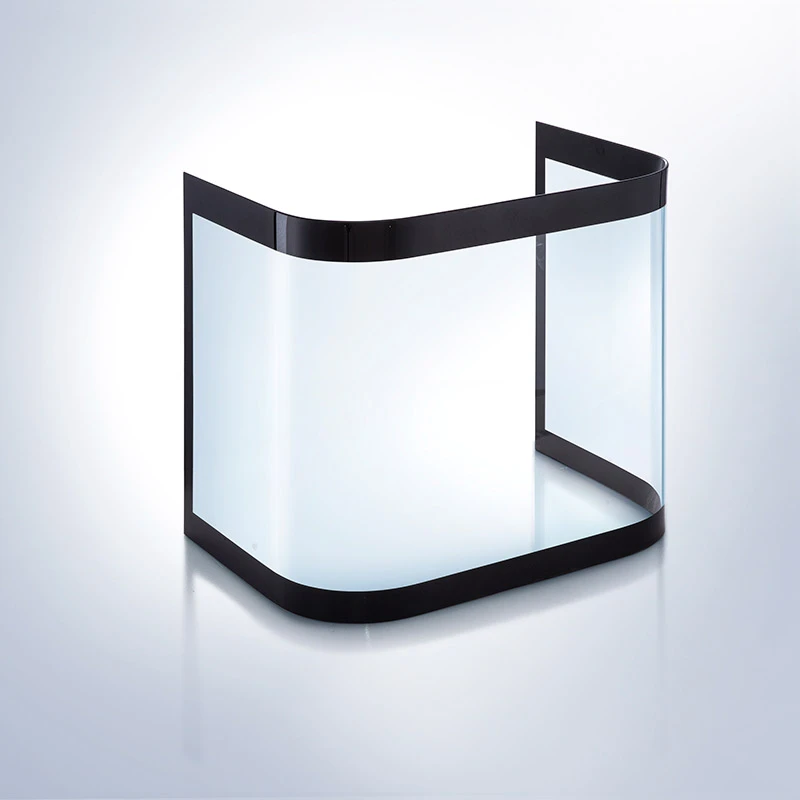
The glass is only one part of the cabinet energy equation, but it is a visible part. Moving from single-pane to double-pane can cut heat gain through the door by roughly 40-50%. Moving from double-pane air to double-pane Low-E argon can cut it another 30-40%. Triple-pane adds a further improvement, but the payback depends on local electricity prices and door-open frequency.
High-traffic supermarket aisles where doors open hundreds of times per day see the fastest payback from triple-pane Low-E argon. Small convenience-store coolers with moderate use often achieve acceptable efficiency with double-pane Low-E argon instead.
Low-E coating reflects infrared radiation back into the cabinet, reducing radiant heat loss. Argon gas fill replaces air in the cavity, lowering convective heat transfer. Together they typically outperform plain air-filled double-pane by a wide margin.
Huayin Glass Solutions, established in 2002 in Shunde, Foshan, Guangdong, runs in-house Low-E coating, ITO transparent conductive heating film and argon-filling lines. That means a single supplier can deliver coated, heated and gas-filled freezer glass assemblies without splitting the bill of materials across multiple vendors.
Start with the cabinet target temperature and the expected ambient humidity, then match the glass to the duty cycle. Refrigerated cake displays at +2°C to +8°C in dry malls can use double-pane Low-E argon. Ice-cream freezers at -20°C in humid climates almost always justify triple-pane Low-E argon or heated glass to prevent external fogging.
Share your cabinet opening size, target temperature, store humidity and estimated annual run hours with an insulated glass supplier China experienced in OEM freezer doors. The right specification is rarely the thickest glass possible; it is the configuration that meets the thermal target at the lowest total cost of ownership.
Further reading: Manufacturing capabilities · ITO vs anti-fog coating comparison · Featured projects
Add:No. 16 Xingye Road, Beijiao Town Industrial Park, Shunde District, Foshan City, Guangdong Province
PHONE: +86 13509957538
TEL: +86 0757-26131933
Email: huayin_glass@163.com

© 2026 Huayin Glass Solutions All Rights Reserved.


