


 Add:No. 16 Xingye Road, Beijiao Town Industrial Park, Shunde District, Foshan City, Guangdong Province
 PHONE: +86 13509957538
 TEL: +86 0757-26131933
 Email: huayin_glass@163.com

Chinese


For a bakery chain running 35 stores in a humid tropical climate, fogged pastry display cabinets were more than a cosmetic issue. Shoppers could not see the products, staff wiped the glass repeatedly, and compressor run times stayed high. The chain replaced 220 standard curved doors with curved tempered heated glass assemblies. This case study walks through the project timeline and the four measurable benefits that justified the investment.
The project is useful for any buyer sourcing pastry display cabinet glass or planning a retrofit of cake and bakery cases. It shows how matching the glazing specification to the operating environment matters more than choosing the highest-cost option.
The chain's existing pastry cases used single-pane curved glass doors. In stores where relative humidity regularly exceeded 75%, the glass fogged within minutes of the morning startup. Staff wiped the doors throughout the day, which increased gasket wear and let warm, moist air into the cabinet.
Over a six-week audit the maintenance team tracked three numbers. First, each door was wiped an average of 11 times per shift. Second, stores with the worst fogging showed higher compressor cycling than newer stores with heated glass. Third, gasket replacements on the fogging cases were running 2.5 times higher than on newer cases.
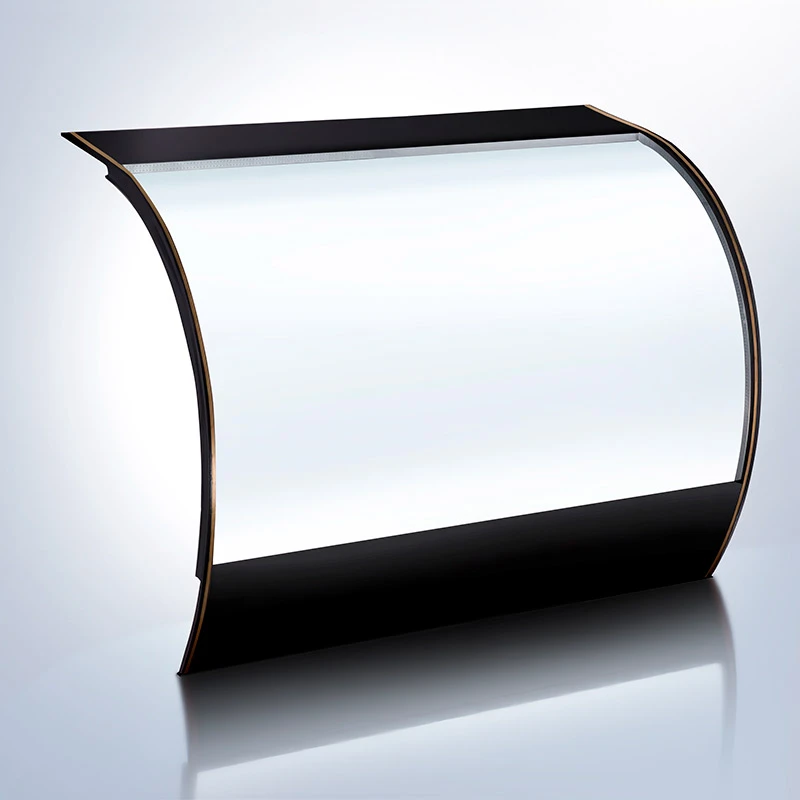
The chain translated its operating problems into a purchasing specification. Because the cabinets were only three years old, frames, hinges, and gasket channels had to be reused. The glass needed to match the original curvature and edge profile while adding active defogging.
| Requirement | Target | Reason |
|---|---|---|
| Visible light transmission | ≥ 88% | Keep pastry clearly visible under store lighting |
| Defog performance | No visible fog at 80% RH, 25°C ambient | Match local humidity profile |
| U-value | ≤ 1.9 W/(m²·K) | Reduce compressor cycling |
| Edge profile | Match original gasket channel | Avoid cabinet modification |
| Heating element | ITO film, ≤ 60 W/m² | Even heat distribution, low power draw |
| Lead time | ≤ 28 days per batch | Roll out store by store |
The final design used a curved tempered heated glass configuration: two panes of tempered glass with a warm-edge spacer, argon fill, and an ITO transparent conductive film on the inner surface of the outer pane. The ITO layer acts as a resistive heating element that keeps the outer glass surface above the dew point.
Coated defogging layers reduce surface tension so water spreads instead of beading. They work in moderate humidity but struggle in tropical environments. ITO heating actively prevents condensation regardless of ambient humidity, which is why it was chosen for this retrofit.
Hot bent glass is shaped at high temperature but is not safety glass. For commercial display cabinets in public retail spaces, curved tempered glass is the safer choice because it meets EN 12150 and ANSI Z97.1 impact requirements and breaks into small, blunt fragments.
The glass was produced with a stepped edge profile that matched the existing gasket channel. This allowed the retrofit to be completed in one day per store, with no cabinet downtime beyond the glass swap.
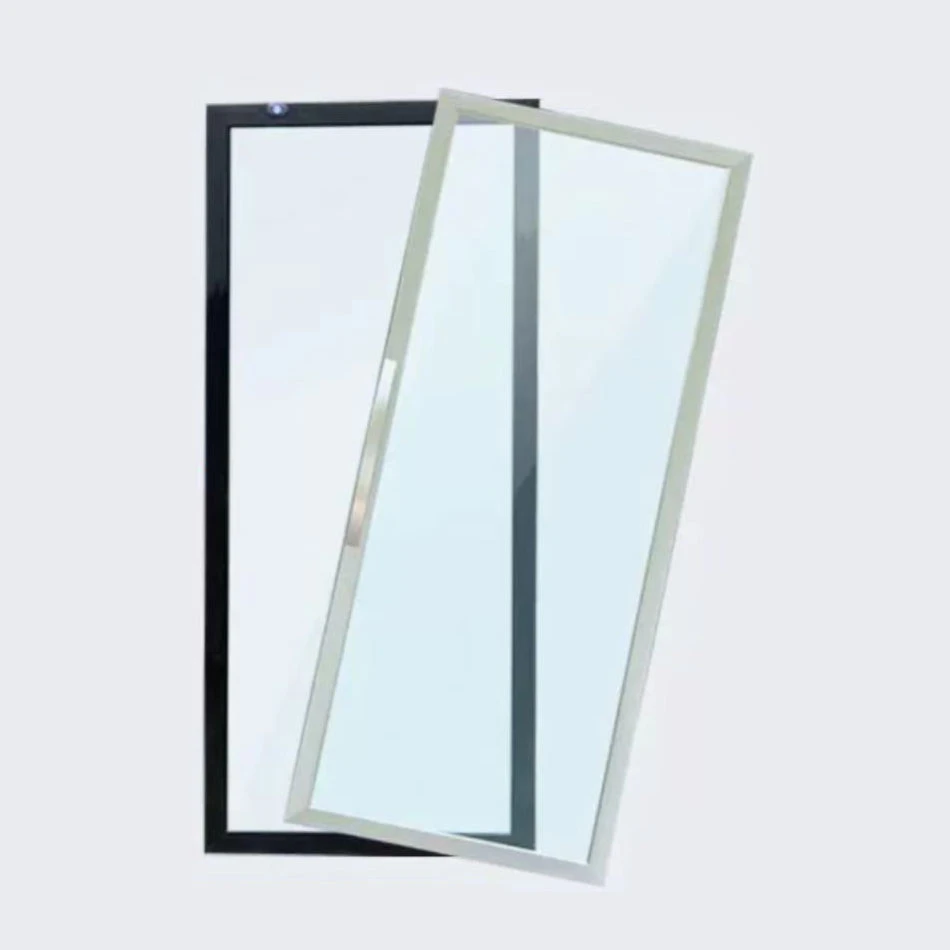
Before the full order, six sample doors were installed in two stores with the highest humidity readings. The sample period lasted five weeks and covered three checkpoints: fog-free hours per day, power consumption trend, and gasket surface temperature.
The samples showed one alignment issue with the spacer offset that affected fit in a small number of older frames. Correcting the edge grind tolerance before mass production prevented what would have been a costly field rework. This is the main reason a structured sampling stage is worth the calendar time.
After all 220 doors were installed, the chain compared the retrofitted stores against a control group that kept the original single-pane doors. The table below summarizes the directional changes measured over two quarters.
| Metric | Direction of change |
|---|---|
| Visible fog events | Reduced to near zero during store hours |
| Manual glass wiping | Down from ~11 to under 2 times per shift |
| Compressor cycling frequency | Reduced versus single-pane baseline |
| Gasket replacement rate | Returned to the level of newer cases |
| Product visibility complaints | Stopped almost completely |
Absolute savings varied by store age and ambient conditions. The chain reported that the retrofit paid back through reduced maintenance and energy savings within the projected window.
Q: Is heated glass always the right choice for pastry displays?
A: No. In dry or lightly conditioned environments, a well-sealed Low-E insulated glass door may be sufficient. The decision should be driven by measured humidity and operating hours, not by specification alone.
Q: How important is the sampling stage?
A: Critical. The spacer offset issue found in samples would have affected the entire batch. A 5-week sample cycle is short compared to the cost of field rework across 220 doors.
The broader lesson: start with a baseline measurement, convert it into a numeric specification, and source against that specification. Huayin Glass manufacturing covers the full chain from CNC cutting to insulated glass assembly, which is what enabled the stepped-edge profile to be produced without changing the cabinet design.
Planning a pastry display or freezer glass retrofit? Send your cabinet dimensions, operating conditions, and target market to our engineering team for a free DFM assessment and sample quotation.
Further reading: ITO glass vs defogging coating · Featured projects · Client cases
Add:No. 16 Xingye Road, Beijiao Town Industrial Park, Shunde District, Foshan City, Guangdong Province
PHONE: +86 13509957538
TEL: +86 0757-26131933
Email: huayin_glass@163.com

© 2026 Huayin Glass Solutions All Rights Reserved.


