


 Add:No. 16 Xingye Road, Beijiao Town Industrial Park, Shunde District, Foshan City, Guangdong Province
 PHONE: +86 13509957538
 TEL: +86 0757-26131933
 Email: huayin_glass@163.com

Chinese


Beverage coolers are the most abused machines on a shop floor. Their doors are slid, slammed, and leaned on thousands of times a month, and the glass door assembly is usually the first component buyers regret not specifying more carefully. When sourcing a beverage cooler glass door assembly from a China OEM factory, seven specifications separate a door that lasts the cabinet's lifetime from one that generates warranty claims within a year. This guide walks importers, cabinet brands, and commercial refrigeration distributors through each spec, why it matters, and how to verify it before placing a wholesale order.
The single biggest cost and performance decision is the glazing build-up. Single tempered glass keeps cost down and suits interior beverage walls in climate-controlled stores. Double-pane insulated glass with air or argon fill is the default for reach-in coolers facing ambient humidity. Triple-pane builds earn their cost in freezers and high-ambient tropical markets.
Ask the supplier to state the U-value target for each option, not just the pane count. A well-made double-pane door with Low-E coating can outperform a poorly assembled triple-pane unit. Huayin's commercial supermarket freezer glass line, for example, is configured with Low-E coating and warm-edge spacers as standard on insulated builds.
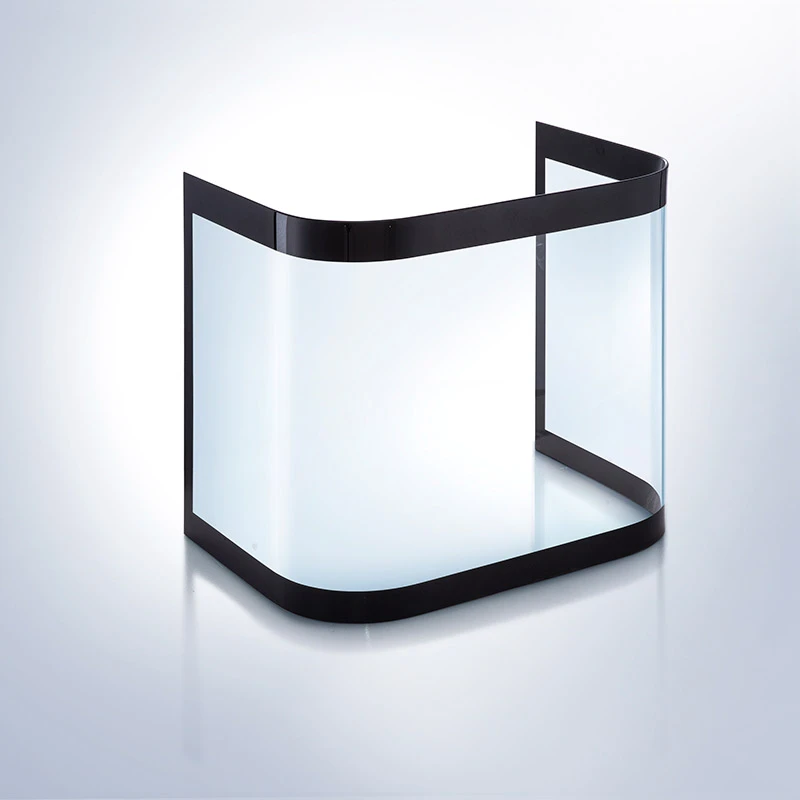
Every glass pane in a beverage cooler door must be fully tempered. Verify three things: the tempering furnace type (forced-convection furnaces produce flatter, more optical-clear panels), the fragment test report per batch, and certification coverage — CCC for China, and ANSI Z97.1 or EN 12150 documentation if your market requires it.
Request a fragmentation test video from the actual production batch, not a catalog photo. A factory that runs its own tempering line, like the one described on Huayin's manufacturing capability page, can usually provide this within a day; trading companies cannot.
Condensation is the top field complaint for beverage cooler doors in humid markets. There are three legitimate strategies, and choosing the wrong one wastes money in both directions:
| Defog strategy | Best for | Cost profile |
|---|---|---|
| Anti-fog coating | Mild humidity, conditioned stores | Lowest |
| ITO heated glass | Tropical or outdoor-facing locations, high humidity | Highest, adds power draw |
| Insulated glass only | Moderate climates, freezer ambient below dew point risk | Moderate |
For a detailed comparison of the two technical approaches, see our article on ITO glass vs defogging coating. The key verification question for any supplier is whether they size the ITO coating resistance to your voltage and glass dimensions, or simply ship a generic heated panel.
Beverage cooler door frames are typically anodized aluminum with e-coating for corrosion resistance in condensing environments. Verify the alloy grade, the anodizing thickness (10 μm minimum for humid markets), and how corners are joined. Screw-fixed corners loosen under door-slam loads; welded or corner-keyed joints hold alignment far longer.
Buyers specifying branded environments should also check screen-print and LOGO capability early. Huayin produces custom LOGO glass doors with side lighting where the print is fired onto the glass before tempering, so it survives cleaning chemicals and hand contact indefinitely.
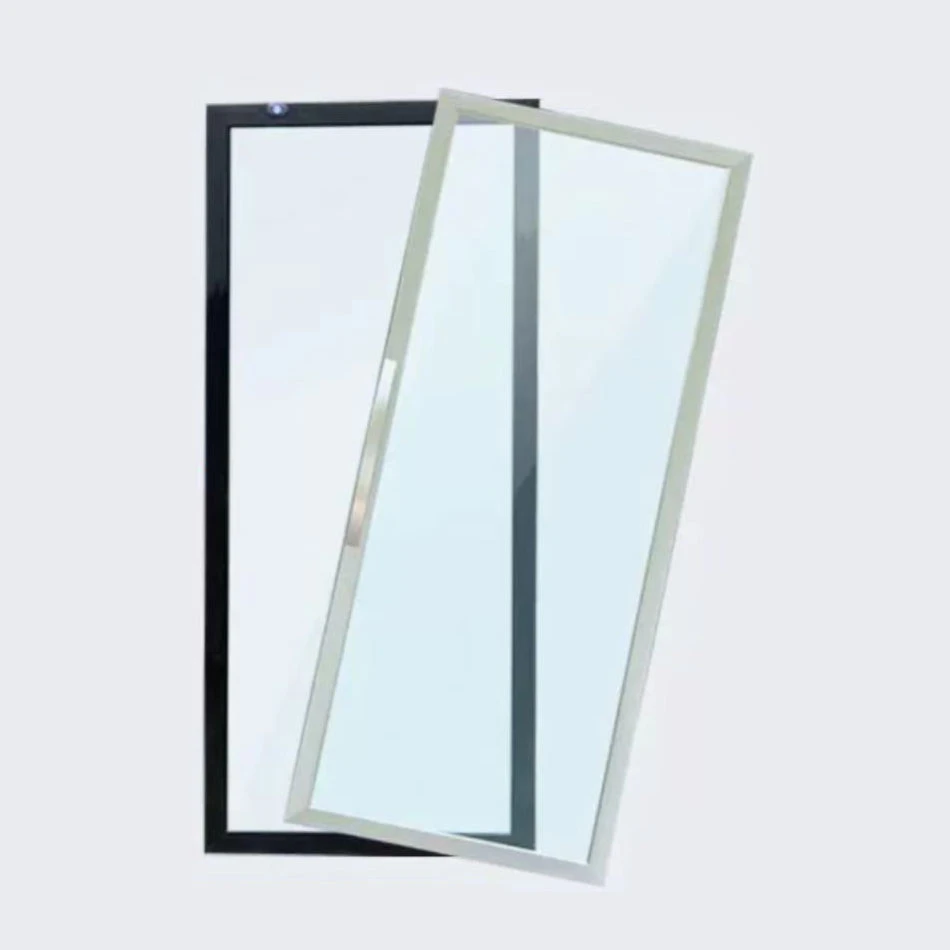
The gasket is a few dollars of material that protects a few hundred dollars of refrigeration equipment. Specify magnetic door gaskets with a documented compression set figure, and ask how the gasket channel is formed in the frame. Poor channel tolerances are the root cause of most "cold leaking" warranty claims.
A practical verification: order sample doors, then measure gap uniformity around the closed door with a feeler gauge. Gaps should be uniform within roughly 0.5 mm around the entire perimeter. Huayin supplies matched magnetic door gaskets with its door assemblies so seal performance is engineered as one system, not left to aftermarket parts.
Hinges and dampers on a beverage cooler see 50 to 100 openings per day. Verify the hinge cycle rating (a commercial-grade spring hinge should be tested to 100,000+ cycles), the self-closing angle range, and whether the door holds open at the angle your operators expect for restocking.
Huayin offers matched self-closing and spring hinges as part of its door assembly program, which matters because hinge geometry and door weight must be matched to prevent sag — the second most common field complaint after condensation.
If you buy doors as complete assemblies rather than glass panes, the factory's assembly process becomes part of your quality system. Verify: glass-to-frame clearance tolerance, corner squareness (diagonal measurement difference within 1 mm), and LED lighting wiring inspection records. Ask for QC photos of the actual batch before shipment — controller area, gasket seating, hinge mounting, and the rating plate.
Factories that assemble doors daily at volume maintain these tolerances naturally; those that assemble occasionally do not. Cross-check by reviewing the supplier's featured projects or requesting a reference customer in your product category.
The seven specs above — glazing construction, tempering certification, defog strategy, frame construction, sealing, hardware cycles, and assembly tolerances — cover over 90% of the failure modes we see in beverage cooler glass doors. The most efficient buyers do not treat this as a negotiation checklist but as the structure of their RFQ: specify each parameter, ask each supplier to state their capability with evidence, and let the sample order confirm the claims.
Ready to source beverage cooler glass doors from a China OEM factory? Send your drawings and target market conditions to Huayin Glass for a free DFM assessment and wholesale quotation. With 25 years of glass deep-processing experience, ISO 9001:2015 certification, and exports to 50+ countries, we build door assemblies that survive real shop-floor abuse.
Further reading: Branded beer cooler glass doors · Refrigerator glass door series · Client cases · All products
Add:No. 16 Xingye Road, Beijiao Town Industrial Park, Shunde District, Foshan City, Guangdong Province
PHONE: +86 13509957538
TEL: +86 0757-26131933
Email: huayin_glass@163.com

© 2026 Huayin Glass Solutions All Rights Reserved.


