


 Add:No. 16 Xingye Road, Beijiao Town Industrial Park, Shunde District, Foshan City, Guangdong Province
 PHONE: +86 13509957538
 TEL: +86 0757-26131933
 Email: huayin_glass@163.com

Chinese


For most importers of freezer glass doors from China, the factory price is not the number that decides profitability — the landed damage rate is. A supplier quoting 5% below market loses that advantage the first time one container arrives with cracked panes and no usable claims evidence. This checklist turns packaging from a vague line item into six verifiable specifications.
Key Takeaways
A crate is not a box; it is a load-bearing structure. For refrigerator glass doors, each crate should use plywood or solid-wood framing with internal separators so panes never touch, and the gross stacking limit must be printed on the crate. Below is a verification matrix you can send to any candidate supplier before ordering.
| Verify | Acceptable standard | Red flag |
|---|---|---|
| Crate material | Plywood/solid wood, fumigation-free ISPM 15 compliant | Raw lumber without heat-treatment stamp |
| Internal separation | Individual cells or foam-lined dividers per pane | Panes packed face-to-face in one cavity |
| Edge & corner protection | Corner guards plus foam edge strips on all four edges | Glass edges bearing directly on crate frame |
| Orientation marking | "This side up / vertical only" arrows printed on crate | No orientation marks; doors shipped flat |
| Stacking limit | Max stack count printed, with load test record | Unmarked crates stacked in the container |
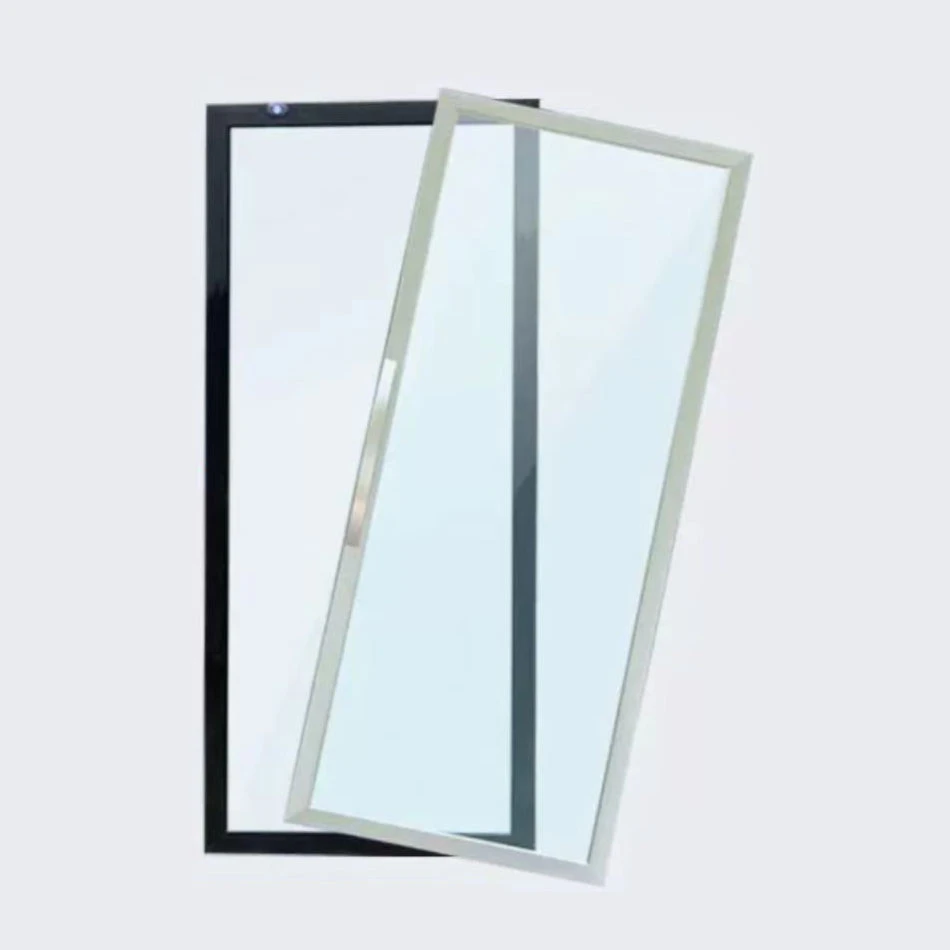
Insulated glass assemblies — including heated insulated door panels — are sealed units. Shipping them flat places sustained shear on the spacer and sealant line, which can open a micro-leak that only shows up weeks later as internal fogging. The rule is simple: vertical in the crate, vertical in the container, and the supplier should prove it with loading photos.
For heated doors, ask how the busbar terminals are protected. An exposed terminal crushed against a crate wall is the most common electrical defect found at destination — it is a packaging problem, not a manufacturing one.
Even perfect crates fail if loading is sloppy. Crates should stand on level dunnage, be braced so they cannot shift, and never have heavy cartons stacked on top of glass crates. A 40HQ container of curved door panels, such as curved tempered glass units, needs dedicated A-frames or vertical racking.
The practical check: request the loading plan and a short loading video with the first order. Suppliers with real export volume produce this without hesitation; sourcing agents re-selling from multiple factories usually cannot.

Even with disciplined packaging, a small residual breakage rate is normal in ocean freight. What matters is who bears it. CIF terms put insurance in the seller's hands; FOB makes it yours. Either way, write the claims protocol into the purchase contract: photos of the intact crate exterior, the opened crate, and the damaged pane with the packing list visible, submitted within seven days of arrival.
Suppliers who ship 50+ countries — as Huayin Glass Solutions does to Southeast Asia, the Middle East, the Americas and Europe — usually accept a breakage allowance clause; a factory that refuses any compensation term is signaling low confidence in its own packaging.
It is a phrase, not a standard. Replace it with the six-row matrix above and ask the supplier to confirm each row in writing.
A crate that looks perfect before departure can still fail after a mid-sea re-stow. Ask for the supplier's breakage rate over the last 12 months, stated per shipment.
Gaskets, hinges and LED strips packed loose on top of glass crates cause as much damage as poor crating. Specify a separate carton zone with a barrier board.
Want a packing specification sheet tailored to your door dimensions and destination port? Contact Huayin Glass Solutions — our engineers will respond with a crate design and loading plan within 24 hours.
Further reading: Manufacturing capability · Client references · Freezer glass products
Add:No. 16 Xingye Road, Beijiao Town Industrial Park, Shunde District, Foshan City, Guangdong Province
PHONE: +86 13509957538
TEL: +86 0757-26131933
Email: huayin_glass@163.com

© 2026 Huayin Glass Solutions All Rights Reserved.


