


 Add:No. 16 Xingye Road, Beijiao Town Industrial Park, Shunde District, Foshan City, Guangdong Province
 PHONE: +86 13509957538
 TEL: +86 0757-26131933
 Email: huayin_glass@163.com

Chinese


The glass panel gets most of the attention in a commercial freezer glass door, but the frame is what holds the assembly together, carries the hinges, seals the gasket, and determines how the door ages in a humid, high-traffic environment. For overseas buyers sourcing freezer glass doors from China, frame material is one of the first specs that separates a commodity door from a long-life OEM product. This guide compares the three most common frame materials and explains when each one is the right call.
A freezer glass door frame is more than a border. It defines the clamping force on the insulated glass unit, sets the geometry for the gasket channel, carries the load of the hinges and handle, and protects the glass edge from impact in busy retail aisles. A poorly engineered frame causes seal failure, door sag, glass stress cracks, and condensation leaks long before the glass itself fails.
That is why experienced buyers evaluate the frame as a structural subsystem, not a cosmetic detail. The right frame depends on door size, expected cycle count, store environment, and whether the door will be used in a retrofit or a new cabinet design.
Aluminum is the default choice for most anodized aluminum glass doors. It offers a strong strength-to-weight ratio, resists corrosion in humid stores, and can be extruded into complex gasket channels and hinge pockets.
6063-T5 is the standard alloy for refrigerator door frames. It extrudes cleanly and accepts anodizing or e-coating. Wall thickness typically ranges from 1.2mm to 2.0mm depending on door height and weight. Taller doors or models with integrated LED strips benefit from the heavier wall to reduce flex.
Anodizing provides a hard, scratch-resistant surface in black, silver, bronze, or custom colors. E-coating applies an epoxy-based layer that is more uniform and cost-effective for complex profiles, but slightly softer than anodizing. Both finishes are common for North American and European OEM orders.
Aluminum frames are ideal for vertical display freezers, beverage coolers, wine coolers, and any application where door weight, color matching, and corrosion resistance matter. They are also the easiest material to integrate with LED light strips and self-closing hinges.
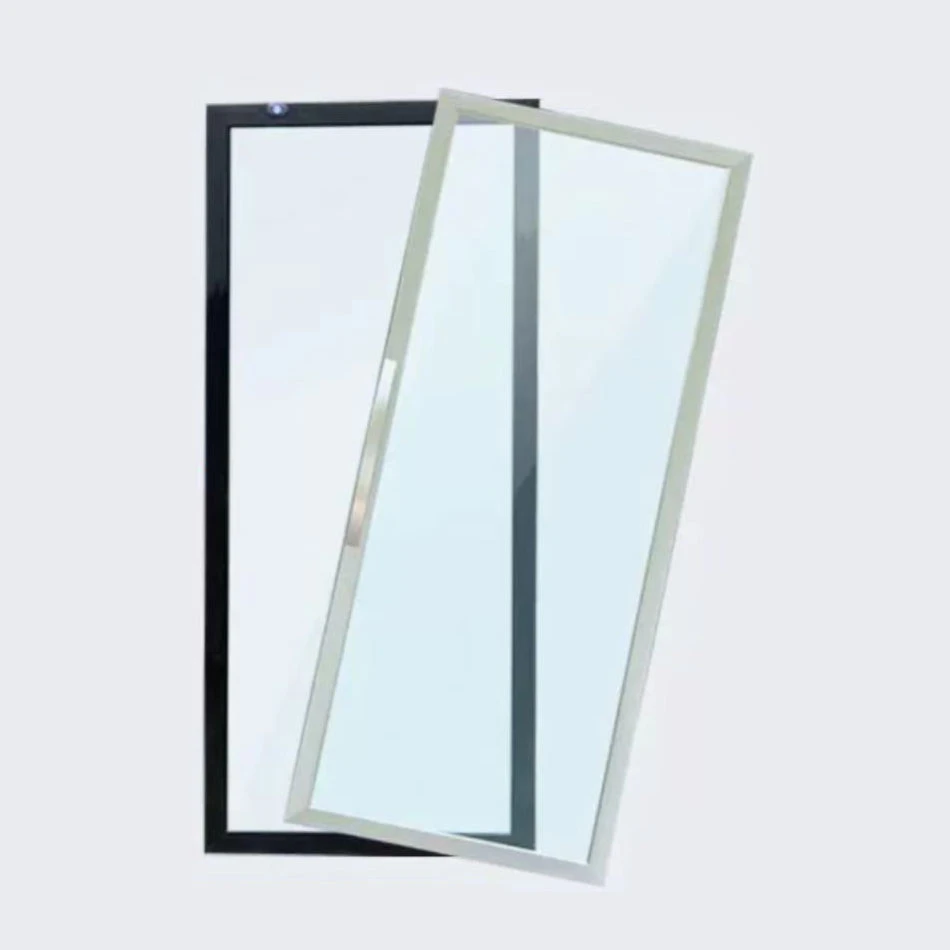
PVC frames are the low-cost option. They do not corrode, they provide better thermal break than metal frames, and they can be molded into one-piece profiles. The downside is lower structural strength and reduced durability in high-traffic retail environments.
PVC is most common on small chest freezers, entry-level display coolers, and short-life promotional cabinets where unit cost matters more than long-term durability. It is also used as a thermal break insert inside aluminum frames to reduce condensation at the edge.
Large doors, heavy traffic, and high-temperature retail spaces expose PVC's limitations. It can deform under sustained hinge load, become brittle in cold storage rooms, and discolor under UV exposure if the stabilizer package is under-specified. For a 7-year service life in a supermarket, aluminum or steel is usually the safer bet.
Stainless steel frames are the premium choice for demanding retail, food service, and industrial applications. They tolerate impact, resist cleaning chemicals, and maintain appearance over long service lives.
304 grade is standard for indoor retail. 316 grade adds salt-spray resistance for coastal or marine applications but increases cost by 30-40%. Stainless steel frames add weight, so hinge specification and cabinet reinforcement need to be matched accordingly.
Stainless steel is preferred for butcher shops, commercial kitchens, high-traffic convenience stores, and any environment where hygiene and impact resistance are priorities. It is also the standard look for premium wine coolers and chef-grade refrigeration equipment.
| Property | Aluminum | PVC | Stainless Steel |
|---|---|---|---|
| Weight | Light | Lightest | Heavy |
| Strength | High | Moderate | Highest |
| Corrosion resistance | Excellent with anodizing | Good | Excellent |
| Thermal performance | Moderate; needs thermal break | Best | Poor without thermal break |
| Finish flexibility | Wide color range | Limited colors | Brushed, polished, PVD |
| Typical service life | 8-12 years | 3-6 years | 12-15+ years |
| Relative cost | Moderate | Lowest | Highest |
Frame material is only half the decision. Finish determines appearance, scratch resistance, and chemical compatibility. The most common options specified by OEM buyers are anodizing, e-coating, powder coating, and PVD.
Anodizing hardens the aluminum surface and provides a metallic look. E-coating is more uniform and better for complex profiles. Powder coating offers the widest color range but is thicker and can fill fine detail. PVD is typically used on stainless steel for premium mirror or black finishes. For most custom logo glass door projects, anodizing or e-coating covers 90% of requirements.
When evaluating a China freezer glass door manufacturer, ask for frame-specific evidence before approving samples.
Aluminum remains the safest all-around choice for most commercial freezer glass doors because it balances weight, strength, finish flexibility, and cost. PVC works for cost-sensitive, light-duty products. Stainless steel is the right call when durability and appearance justify the premium.
The key is to specify the frame as part of the total door assembly rather than an afterthought. A well-matched frame extends gasket life, reduces service calls, and protects the insulated glass investment. Huayin Glass Solutions supplies freezer glass door assemblies with aluminum, PVC, and stainless steel frame options, all produced under ISO 9001:2015 quality controls. Send your cabinet drawings and target market requirements for a free OEM quotation and DFM review.
Further reading: ITO glass vs defogging coating · Freezer glass products · Manufacturing capability
Add:No. 16 Xingye Road, Beijiao Town Industrial Park, Shunde District, Foshan City, Guangdong Province
PHONE: +86 13509957538
TEL: +86 0757-26131933
Email: huayin_glass@163.com

© 2026 Huayin Glass Solutions All Rights Reserved.


