


 Add:No. 16 Xingye Road, Beijiao Town Industrial Park, Shunde District, Foshan City, Guangdong Province
 PHONE: +86 13509957538
 TEL: +86 0757-26131933
 Email: huayin_glass@163.com

Chinese


A beverage cooler brand in Southeast Asia sent us the same complaint three times in one year: "The doors fog up the moment summer starts. Customers can't see the product." The glass was fine by laboratory standards — the problem was that the configuration was never matched to a 33°C, 85% RH climate. If you are sourcing freezer glass doors for hot, humid markets, these are the six questions to ask before you sign an OEM contract.
Condensation is simple physics: when a glass surface is colder than the surrounding air's dew point, moisture in the air deposits on it. A freezer cabinet held at -18°C pulls the inner pane down, and conduction through the glass drags the outer surface below the dew point of a 33°C, 85% RH showroom.
That means fogging is not a defect you "fix" at the door edge — it is a heat-transfer problem you solve in the glass configuration. The three levers are: blocking radiant heat with a Low-E coating, slowing conduction with insulated glass units, and if needed, actively warming the outer pane with ITO heating film.
For display freezers and beverage coolers operating at 0°C to +5°C in hot climates, a well-built Low-E double glazed unit is usually sufficient. The outer surface stays within one or two degrees of room temperature, which keeps it above the dew point in most showroom conditions.
Triple pane earns its cost in two cases: freezer doors running below -15°C for long periods, and ultra-low energy targets where every watt saved cuts compressor sizing. A commercial freezer glass supplier should be able to run a condensation-risk calculation for your actual cabinet temperature and target climate — ask for it during quotation, not after installation.
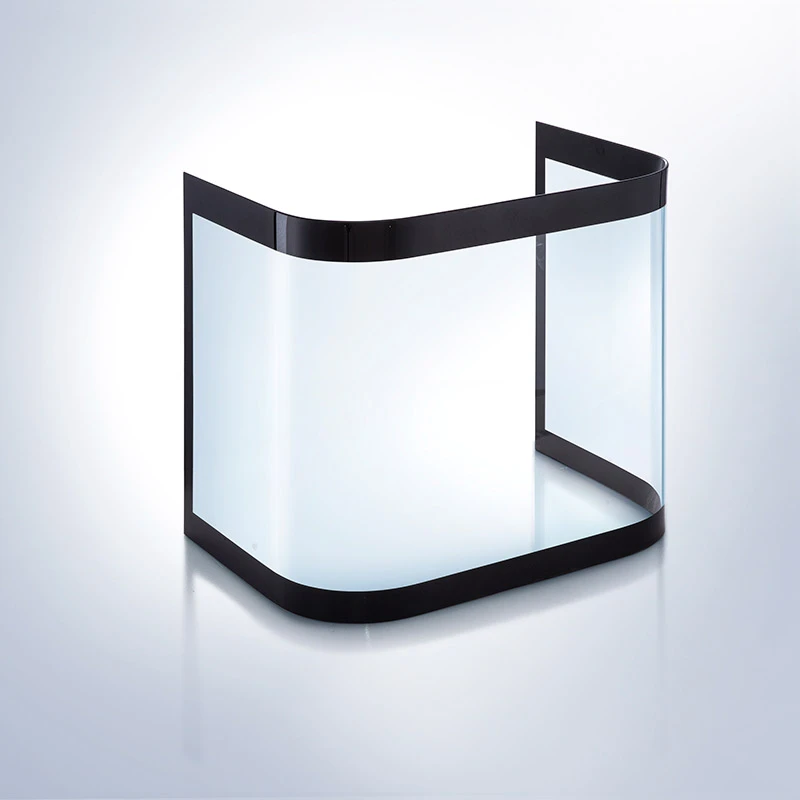
Low-E (low emissivity) is a microscopically thin metallic coating that reflects infrared radiation back toward its source. Inside a freezer door, it bounces the cabinet's radiant heat back in instead of letting it pour through the glass — which cuts radiant heat transfer by several times compared with uncoated panes.
For buyers, the specification that matters is emissivity (≤0.10 for standard single-silver Low-E, lower for double-silver) and which cavity the coated surface faces — getting the coating position wrong inside the IGU wastes the entire benefit. This is exactly the kind of detail an experienced insulated freezer glass factory controls automatically, and a trading company often gets wrong.
ITO heated glass has a transparent conductive film laminated between panes; apply a low voltage and the glass surface warms a few degrees above the dew point, so condensation physically cannot form. It is the only solution that keeps vision 100% clear regardless of ambient humidity.
The honest answer on cost: not every door needs it. Reserve ITO heating for doors facing open storefronts, tropical outdoor-adjacent spaces, or cabinets that repeatedly get opened in humid air. For those applications it is indispensable — see our technical comparison of ITO heated glass vs anti-fog coating for why passive coatings alone rarely survive tropical summers. Our coated curved tempered heated IG glass combines the heating function with Low-E and insulation in one unit.
| Defog strategy | Power draw | Performance in 85% RH | Best for |
|---|---|---|---|
| Double glazed + Low-E | None | Clear in most indoor conditions | Standard coolers, moderate climates |
| Triple pane + Low-E | None | Clear down to low-temp freezer duty | Freezers, high-humidity cities |
| Triple pane + ITO heating | Low voltage, per-door | Guaranteed clear in all conditions | Tropical markets, open-front displays |
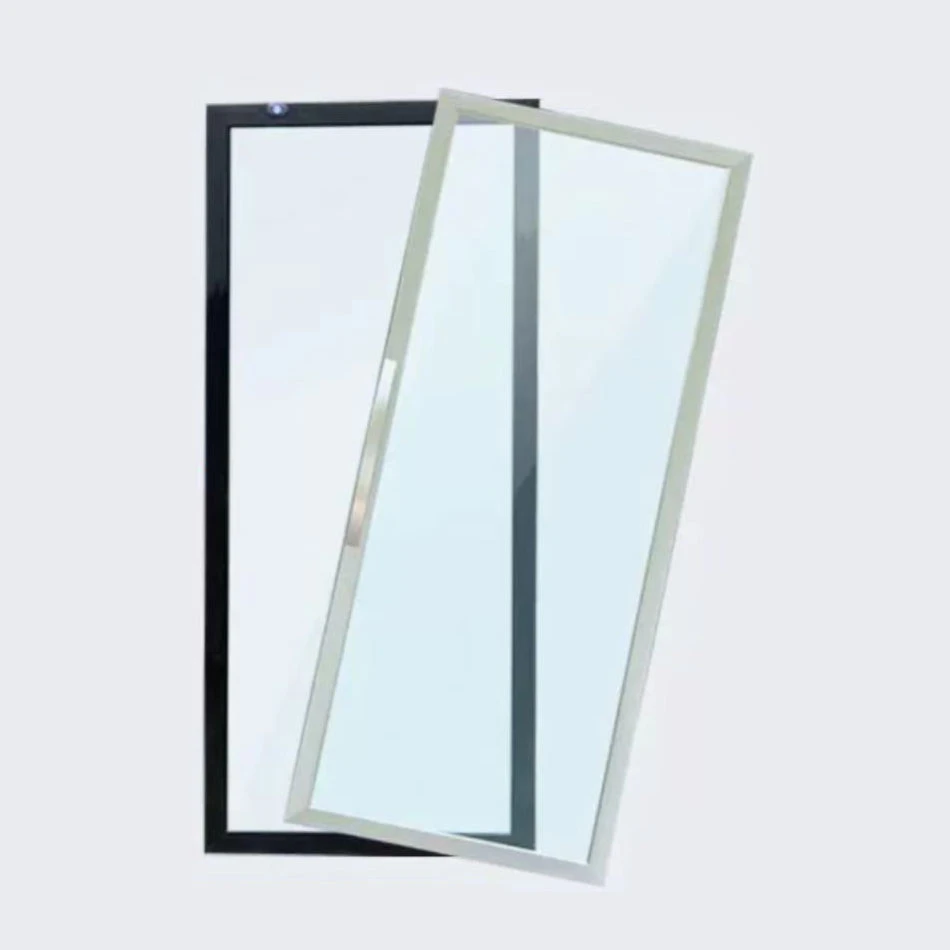
Argon is a real, measurable improvement — roughly a third less heat transfer through the cavity than dry air — but it only delivers if the unit is sealed properly. A properly assembled IGU from an automated insulating line holds its gas for decades; a hand-caulked unit loses argon within a few years and the benefit disappears with it.
So the buyer question is not "argon or no argon" but "what line assembles your units?" Ask whether the factory runs a fully automated insulating production line and what its gas retention spec is. Huayin's manufacturing capability includes a full automatic insulating line with argon filling, verified per batch.
Ask for three things before committing. First, climate-specific references: which humid-market projects has the factory shipped, and can they show results (see our client cases)? Second, process ownership: coating, bending, tempering, insulating and heating-film lamination under one roof means one party accountable for the whole configuration. Third, test documentation: emissivity reports, argon concentration checks, heating uniformity tests and tempered glass safety certificates per batch.
A supplier who answers all three with specifics is worth a sampling round. One who answers with "no problem, we can do everything" is not.
Start with your climate data and your cabinet temperature, not with a catalog. Send both to the factory along with door dimensions and target energy figures, and ask them to propose a configuration with a condensation-risk justification. That single exchange tells you more about a supplier than any brochure.
Huayin Glass Solutions is a glass deep-processing factory in Shunde, Foshan, Guangdong, established in 2002 with 6,000+ m² of workshops, ISO 9001:2015 and China 3C certified, exporting to 50+ countries across Southeast Asia, the Middle East, Africa and the Americas. Custom freezer glass doors, heated insulated glass and curved tempered units are all routine OEM work here.
Send your drawings and climate requirements for a free configuration evaluation and sampling quote.
Further reading: Products · Featured Projects · Commercial Supermarket Freezer Glass
Add:No. 16 Xingye Road, Beijiao Town Industrial Park, Shunde District, Foshan City, Guangdong Province
PHONE: +86 13509957538
TEL: +86 0757-26131933
Email: huayin_glass@163.com

© 2026 Huayin Glass Solutions All Rights Reserved.


